The Reservoir That Burst and the Rule India Chose to Outgrow
An English reservoir gave the common law a rule about dangerous things. A gas leak in Delhi showed why India needed a stricter one.
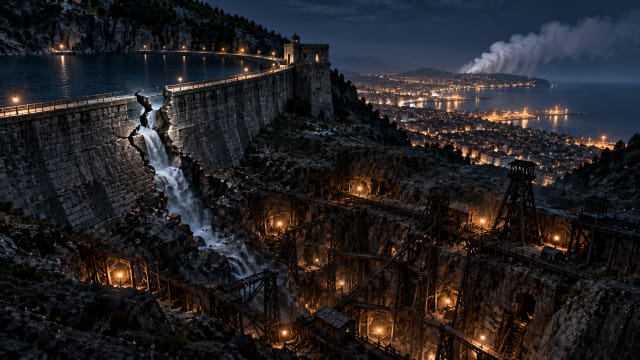
In the 1860s two mill owners built a reservoir on their land in Lancashire to supply water to their mills. Beneath the site lay old coal shafts, long abandoned and filled with earth, which connected to the working mines of a neighbour named Thomas Fletcher. When the reservoir was filled, the water broke through the shafts and flooded his mine. The owners had not known of the shafts, and the contractors they hired had been careless, but the owners had not been careless themselves.
The question was whether the owners could be made to pay although they had done nothing wrong. Justice Blackburn held that a person who brings onto his land and keeps there something likely to do mischief if it escapes must keep it at his peril, and is answerable for the damage that follows its escape. The House of Lords approved the rule in 1868, adding that the use of the land must be non natural, that is, not an ordinary use of land. Liability under the rule did not depend on proof of negligence.
More than a century later, in December 1985, a leak of oleum gas from a fertiliser plant in Delhi harmed many people, and the Supreme Court was asked how far the old English rule applied to a modern industrial state. Chief Justice Bhagwati observed that the rule had grown up in a different age and declared that it did not suit conditions in India. The Court laid down a stricter rule of absolute liability for enterprises engaged in hazardous activities, under which they cannot escape by pointing to exceptions such as an act of God or the act of a stranger. It added that the compensation should rise with the size and resources of the enterprise, so that the larger the enterprise, the greater the payment and the stronger the deterrent. The case is known as M C Mehta v Union of India.
Liability under the rule did not depend on proof of negligence.
Discussion
Sign in to join the discussion.
More in Law & Justice

The Judgment That Freed One Man and Left Slavery Standing
Lord Mansfield's famous ruling of 1772 is remembered as the end of slavery in England. The real holding was far smaller, and its reach far greater.

The Conviction That Fell on a Technicality and the Law That Stayed
A Tennessee teacher was convicted in 1925 for teaching evolution, and the conviction was undone two years later for a reason that had nothing to do with science. The law that put him in court lived on.
The Acquittal That Did Not Mean Innocence
Lizzie Borden walked free in 1893, and the verdict shows what a court can and cannot declare.

The Charter That Failed in Ten Weeks and Won the Centuries
Magna Carta was annulled by a pope within weeks of being sealed. Its afterlife in courts and parliaments has outlasted almost everything it originally said.