The Death of Heroic Warfare
How drones transformed modern warfare by separating violence from vulnerability, reshaping heroism, ethics, and the psychology of conflict.
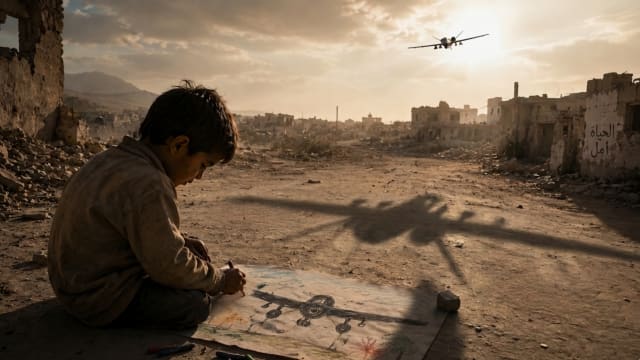
Drone warfare has transformed combat into something previous civilizations would barely recognize as war. For most of history, killing required physical proximity. A soldier saw the enemy’s face, heard screams, smelled smoke and blood, and accepted the possibility of dying in return. Ancient warfare linked violence with vulnerability. The warrior and the victim shared the same geography of danger. Modern drones break that ancient arrangement. Today, an operator sitting in an air-conditioned room can monitor, target and kill someone thousands of miles away before driving home through suburban traffic an hour later. War no longer requires the aggressor to physically inhabit the battlefield.
Historians understand how military technology evolves. Spears gave way to rifles, cavalry to tanks, and manned aircraft to autonomous systems. Yet the psychological transformation created by drones remains harder to measure. What happens when violence becomes remote? Military theorists once believed fear restrained nations because states had to risk their own citizens in combat. Democracies especially hesitated when coffins returned home draped in flags. Drone warfare weakens this restraint by reducing the immediate human cost for the attacking side. When political leaders can strike enemies without exposing soldiers to danger, military action becomes easier to authorize and easier to sustain. The battlefield starts resembling a technical process rather than a mutual contest of risk.
Supporters of drone warfare argue that this transformation represents moral progress. Drones can hover above targets for hours, gathering intelligence and distinguishing civilians from combatants more carefully than traditional bombing campaigns. Precision strikes may prevent the destruction associated with invasions or artillery warfare. From this perspective, drones reduce unnecessary suffering while protecting soldiers from death. The argument carries weight. Few societies willingly abandon technologies that promise greater efficiency and fewer casualties for their own side.
Yet this argument also reveals the strange asymmetry of modern conflict. The side operating drones experiences safety, distance and technological superiority. The side beneath them experiences permanent surveillance and unpredictable death from the sky. Villagers in regions monitored by drones often describe the constant sound overhead as psychologically exhausting. The machine becomes a symbol of invisible power. Unlike traditional armies, drones do not occupy territory in visible numbers. They create fear through uncertainty. Death can arrive without warning, without soldiers, and without any chance of retaliation.
Distance, however, does not eliminate psychological consequences for those operating the machines. Drone operators often observe targets for days before attacking. They watch routines unfold. Families gather for meals. Children move through courtyards. Men carry groceries or repair vehicles. Traditional soldiers might encounter the enemy only briefly in chaotic combat. Drone warfare creates a colder but more intimate form of observation. Some operators later report symptoms resembling post-traumatic stress disorder despite never entering physical danger themselves. The human mind appears unable to treat repeated killing as entirely abstract. Watching death through a screen still leaves moral residue.
Ideas about heroism also become unstable under drone warfare. Classical military cultures celebrated courage because combat demanded visible personal risk. Achilles and medieval knights entered spaces where survival was uncertain. The drone operator inhabits no such environment. Skill remains necessary, but heroism becomes harder to define when the warrior is physically absent from danger. Critics sometimes describe drone conflict as “PlayStation warfare,” suggesting that technology has transformed killing into a detached technical procedure. The comparison is simplistic, yet it captures a broader cultural anxiety. War may be losing the tragic reciprocity that once gave it moral weight.
War has always adapted to technology. Gunpowder changed empires, aircraft changed geography, and nuclear weapons changed diplomacy. Yet drones alter something deeper than strategy. They separate violence from vulnerability. For centuries, rulers who sought war had to gamble the lives of their own citizens alongside their ambitions. Now destruction can be delivered through satellites, algorithms and remote-controlled aircraft operated continents away.
Perhaps the greatest danger of drone warfare is not that it makes war deadlier, but that it makes war easier to begin and easier to ignore.
Discussion
Sign in to join the discussion.
More in War & Peace

The World Is Becoming Medieval Again
Is the nation state losing its monopoly on power? Discover why the twenty first century increasingly resembles the political architecture of the Middle Ages.

The Art of Corporate War
An exclusive extract from Abhishek Leela Pandey's The Art of Corporate Power, exploring how capitalism transformed warfare into strategic competition.
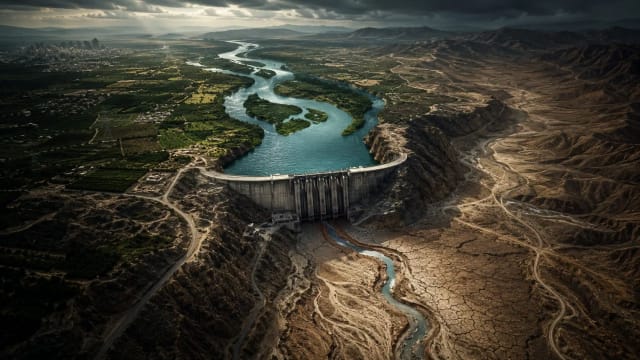
Can Water Become a Weapon?
Water is rarely a weapon by itself. But when control over its flow creates unequal dependence, rivers can become instruments of geopolitical power.

The Country That Replaced the Mirror with a Portrait: An RC Inspired by IIM Indore
North Korea did not ban mirrors. It did something more precise. It ensured that the only reflection available to its citizens was the one the state had prepared for them.