Are Humans the Most Sexual Organisms on the Planet? An RC Inspired by IIM Indore
Most animals mate seasonally. Humans do not. The question is not why humans have more sex. It is what human sexuality has become, and why it looks less like animal mating and more like language.
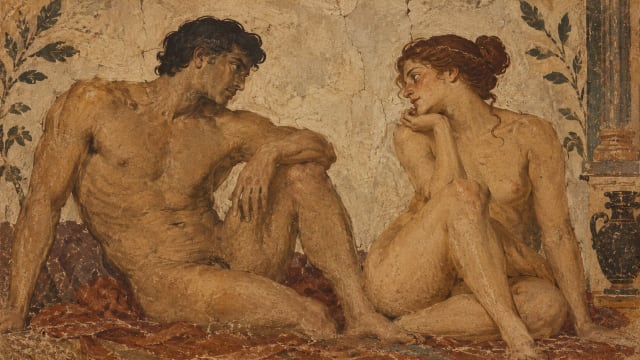
Most animals reproduce seasonally. A hormonal cascade triggered by photoperiod, temperature or rainfall initiates a brief window of sexual activity, and when that window closes, interest disappears as completely as if it had never existed. The female chimpanzee is sexually receptive for a few days per menstrual cycle. The elephant seal breeds once a year. The mayfly mates once and dies. Across the animal kingdom, sexuality is a tightly regulated mechanism switched on by reproductive necessity and switched off when that necessity passes.
Humans are a striking exception. Human sexual behaviour occurs throughout the year, across all phases of the reproductive cycle, during pregnancy, and well into decades beyond reproductive viability. This is not merely a quantitative difference. It represents a qualitative departure from the pattern that governs virtually every other species. Something happened in human evolutionary history that decoupled sexual behaviour from its original reproductive function and recoupled it to something else entirely.
The standard evolutionary explanation invokes pair bonding. Humans, unlike most primates, form long-term reproductive partnerships. Sustained sexual interest between partners maintains the bond and ensures continued paternal investment in offspring whose survival depends on prolonged parental care. On this account, year-round sexuality is an adaptation that solves the problem of keeping two individuals committed to each other across the years required to raise a helpless infant to independence.
The explanation is plausible but incomplete. Several other species form lifelong pair bonds without exhibiting anything like the frequency, diversity or apparent importance of human sexual behaviour. Gibbons are monogamous but highly seasonal. Albatrosses mate for decades but sexually engage for only brief periods. The pair-bonding hypothesis explains why sustained sexuality might be advantageous without explaining why it became so elaborated, so cognitively central and so thoroughly interwoven with identity, creativity, social hierarchy and emotional life in a way that is apparently unique to our species.
A more comprehensive account requires noticing that human sexuality has been recruited into an extraordinary range of functions that have nothing to do with reproduction. It operates as a social currency, a mechanism of alliance formation, a vehicle for dominance negotiation, a source of psychological regulation and a medium through which individuals communicate status, vulnerability and trust. In this sense, human sexuality resembles language more than it resembles the mating behaviours of other animals. Like language, it is formally separable from the immediate biological need it once served and deployable across an open-ended range of social and cognitive purposes.
One might object that this account romanticises what is ultimately a biological drive and that the social elaborations of sexuality are secondary overlays on a primary reproductive mechanism. But this objection underestimates how thoroughly the mechanism itself has been modified. Human females, uniquely among primates, have concealed ovulation. There is no external signal of fertility. This means that neither the female nor her partner can reliably identify the reproductive window, which renders strategic reproductive sexuality nearly impossible and makes sustained year-round engagement the only viable strategy. The concealment appears to be an evolved feature rather than a limitation. It is as if the biology itself conspired to sever the connection between sex and reproduction at the level of the individual encounter.
Human sexuality is the only sexuality on the planet that has been substantially reorganised around the requirements of social cognition rather than reproductive biology.
The answer to the question posed in the title is therefore neither straightforwardly yes nor no. In terms of frequency and temporal scope, humans are among the most sexually active organisms on earth. But what is perhaps more remarkable is not the quantity but the nature of what human sexuality has become. It is the only sexuality on the planet that has been substantially reorganised around the requirements of social cognition rather than reproductive biology. Whether that makes humans the most sexual organisms depends entirely on what one means by sexual.
This essay started as a childhood curiosity. Growing up across Chandigarh, Jammu, Darjeeling, Bhutan, Ballia and Lucknow, I used to observe the mating behaviour of animals around me and read whatever books I could find on the subject. Years later, I realised those questions deserved a proper answer. This essay is a tribute to the works of Jared Diamond and Sarah Blaffer Hrdy, and to my own small observations as a child. I have also made sure it remains true to the style IIM Indore uses when setting the CAT.
Discussion · 2
Type: Author's POV/ Dominant Hypothesis Tone: Reflective, argumentative as well as reflective. Main Idea: Humans are the most sexually active organism of the animal kingdom or not. The author argues through the passage that unlike other animals of the animal kingdom humans reproduce all year round under any condition without the aim of reproducing offsprings. While the standard scientific pair bonding theory explain the year round activity is significant for the upbringing of the offspring, it is invalidated by other examples of Gibbons and Albatrosses, who couple together but without sexual activity. The author focusses on the qualitative aspect thant the quantitative aspect of human sexual behavior by explaining it beyond a biological process to a social functioning level.He explains it has a open-ended range of social and cognitive purposes.It act as a currency for human bonding, showcase of trust and dominance too. It is analogous to language that leads to the most significant part of evolved female biology: concelead ovulation. Unlike other animals, human females have hidden fertile window, hence humans aren't aware of reproductive window. Conclusively, in terms of frequency, humans might be the most sexuallly active animals however, by nature sexuality is driven by social cognition than simple sex which subjective as per the reader's perspective.
According to the passage, in animals' sexuality is tightly regulated mechanism it occurs according to necessity, human is exceptional, something occurs in evolutionary history that alters the universal reproductive function to something else. Humans form long term reproductive partnership which helps in maintaining the bond and made them committed to each other which helps in to raise helpless infant to adult even though some other species also form lifelong pair bond, what makes humans unique is sustained sexuality that is so cognitively central with identity, social hierarchy and emotions. in this sense human sexuality resembles language more than it resembles mating behaviour of other animals, It is reorganised around the requirements of social cognition rather than reproductive biology.
Sign in to join the discussion.
More in Biology
Why Humans Have the Largest Penis Among All Primates: An RC Inspired by IIM Indore
Desmond Morris had a simple answer. Modern biology has a more complicated one. What changed between 1967 and now reveals as much about science as it does about human anatomy.

Polyamory
Is monogamy a biological destiny or a cultural invention? A philosophical exploration of polyamory, love, evolution, and the arithmetic of romance.
Why Death May Be Necessary for Life and Evolution
Explore why death may be essential for life through evolution, biology, cancer, aging and the hidden role mortality plays in sustaining nature.
Would a Fourth Dimensional Being Be a God?
A thought experiment in higher dimensions asks whether what looks like a miracle might simply be reality viewed from a geometry we cannot perceive.