Shunya: The Power of Nothing
A poetic reflection on shunya showing how zero transforms absence into structure, shaping mathematics, thought, and the architecture of reality.

Before numbers learned to speak, there was a silence drawn in sand. A child sketches a circle and calls it nothing. The act feels trivial, yet that curved boundary carries an idea that would later rewire thought itself. Shunya, the Sanskrit word for zero, does not merely name absence. It gives absence a place within order. It allows nothing to sit beside something without dissolving it. In that quiet gesture, the mind performs a strange inversion. It does not remove meaning from the world. It relocates it.
The deeper claim is unsettling but exact. Nothingness can act. Early Indian mathematicians did not treat zero as an afterthought. They designed it as a working part of a system. In positional notation, shunya became a silent operator. A number turned from a static mark into a relationship. Ten was no longer a single idea. It became one followed by a pause that magnified it. That pause, disciplined and repeatable, began to generate scale. Absence stopped being empty and started becoming useful. The void became a tool that could be repeated, extended, and trusted.
This move reflects a kind of intellectual engineering. Faced with the chaos of counting, thinkers simplified the world into symbols and then did something radical. They marked what was missing. Once absence could be written, it could be handled. Arithmetic opened into algebra. Algebra reached toward calculus. The digital systems that now govern daily life still rely on this quiet inheritance. Every stream of data rests on the interplay between presence and encoded absence. The modern world, for all its speed and noise, is built on a disciplined acknowledgment of what is not there.
To encode nothing is not to erase reality but to reorganise it.
Some argue that zero is nothing more than a convenience, a placeholder that keeps columns aligned. On this view, it is practical but shallow. That reading feels safe but it is incomplete. To formalise nothing is to break a deep habit of thought that ties reality only to what appears. Many traditions hesitated at this edge. Greek mathematics achieved elegance in form yet avoided the void, preferring continuity over emptiness. Shunya crosses that boundary. It allows absence to function without turning it into substance. It reframes nothing as a condition for order rather than a threat to it.
The idea travels inward as well as outward. Human life is shaped by what is missing. There are pauses in speech, gaps in memory, losses that resist repair. The instinct is to fill these spaces, to deny their outline. Yet shunya suggests another approach. Absence can be held in place without being erased. Within an equation, zero does not fracture the system. It steadies it. It defines a limit that lets everything else remain coherent. It offers a discipline of restraint in a world that constantly demands addition.
What is not present begins to govern what is present.
The pattern repeats across domains. In finance, a zero balance marks a reset. In music, silence gives rhythm its shape. In language, a pause carries meaning as surely as a word. In architecture, empty space defines form. Across domains, absence becomes a form of structure rather than a lack of it. It is not the opposite of presence but its hidden partner, shaping it from within.
The circle in the dust, then, is not empty. It is a compact between mind and world. It says that nothing can be counted, placed, and used without contradiction. Once that compact is accepted, infinity no longer feels distant. It sits quietly within the system itself, implied by the very space that first appeared to hold nothing at all. What began as a child’s idle gesture becomes a principle that underwrites reason, measurement, and imagination itself.
Discussion · 3
Shunya: The Power of Nothing P-1 It gives absence a place within order. Set beside something without dissolving it. It doesn't remove but relocates it. P-2 Nothingness can act. Absence stop being empty and started becoming useful. P-3 Every stream of data connects presence and absence. Modern world is established on the fact of what is not there. To encode nothing is not to erase but reorganize it. P-4 Nothing as condition for order rather than threat. P-5 Zero defines the limits which leads to coherency for everyone. Discipline of restraint in a world constantly demands addn. P-6 How in every domain empty space defines its form. Not a opposite of presence but its partner. P-7 Conclusion Nothing can be counted, placed and still without contradictions.
Zero is not just nothing; it gives absence a role in systems. Indian mathematicians used it to build number systems and scale. This idea goes beyond math, showing that absence can create structure and meaning in life and different fields.
Shunya explores how the Indian concept of zero transformed absence into structure. The essay argues that zero was not merely a placeholder but a philosophical and mathematical breakthrough that enabled algebra, calculus, and computation. By formalising nothingness, shunya reshaped human thought, revealing absence as a stabilising force across mathematics, language, music, and life itself.
Sign in to join the discussion.
More in Mathematics

Abraham Wald and the Missing Bullet Holes
The statistician Abraham Wald is credited with telling the military to armour the parts of its bombers that showed no bullet holes. The advice sounds backwards until a reader asks which planes were never seen.

The Number Europe Refused
Indian mathematicians were calculating with zero by the seventh century. Europe's bankers banned the numerals that carried it, and the word for it still holds the suspicion.
The Mathematician Who Said No - An RC Inspired by IIM Indore
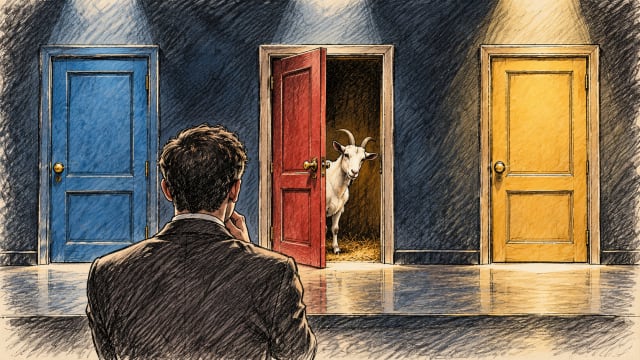
In 1990 a magazine columnist gave a correct answer to a game show puzzle and was buried in angry letters from people with doctorates. The mistake that followed reached the greatest mathematicians too.
Would a Fourth Dimensional Being Be a God?
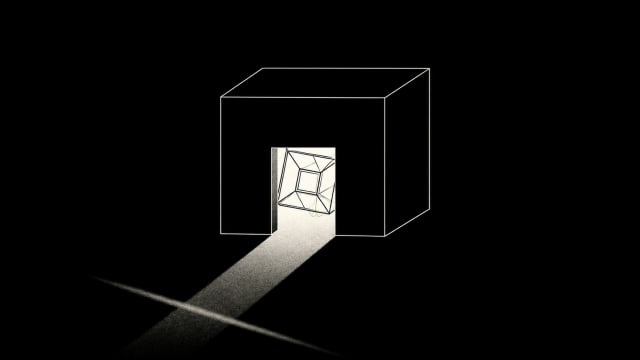
A thought experiment in higher dimensions asks whether what looks like a miracle might simply be reality viewed from a geometry we cannot perceive.