The Wall That Astronauts Could Not Find
For generations schoolchildren learned that the Great Wall of China can be seen from space. The first Chinese astronaut returned with a different report.
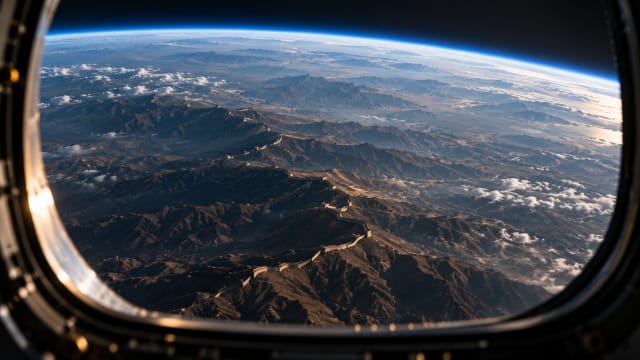
In 2003 China sent its first astronaut into orbit, and the country waited to hear about the Great Wall. Yang Liwei circled the Earth fourteen times aboard Shenzhou 5 and, after he landed, reportedly told interviewers that he had looked for the wall and could not see it. The answer caused a stir at home, where schoolbooks had long taught that the wall is the only human construction visible from space. Textbook editors were later reported to have reviewed the claim.
The claim is much older than the space age. A version is credited to a Ripley's Believe It or Not cartoon from 1932, and the traveller Richard Halliburton is said to have repeated a similar boast in a book of marvels in 1938. Both dates lie decades before any human left the atmosphere. The idea survived because it was flattering and impossible for most people to test, and it grew more impressive as the wall grew longer in the telling.
The physics is simple. The wall is long but narrow, in most places only a few metres across, and it is built of local stone and earth whose colours blend into the hills it follows. At the height of the International Space Station, roughly four hundred kilometres up, the unaided eye cannot separate so thin a line from its background. Astronauts have reported spotting cities at night, airport runways and large highways with ease, because these are wider, brighter or sharper against their surroundings. Photographs taken from orbit with powerful lenses have shown stretches of the wall, but that is a different achievement from seeing it with the eye alone.
The myth also teaches a lesson about how facts spread. Correction rarely travels as fast as the original claim. Schoolbooks and quiz shows had carried the legend for decades, and a single astronaut's answer had to compete with all of them.
Correction rarely travels as fast as the original claim.
Yet the story has a second layer. The wall that cannot be seen from orbit can be seen clearly on the ground, and its real history, a patchwork of walls built by different states and dynasties over some two thousand years, is more interesting than the legend of one unbroken line.
Discussion
Sign in to join the discussion.
More in Space & Astronomy

The Signal That Wrote Its Own Exclamation
For seventy two seconds in 1977 a telescope heard something that has never come back. An astronomer's one word reaction gave it a name.
Chasing Shadows
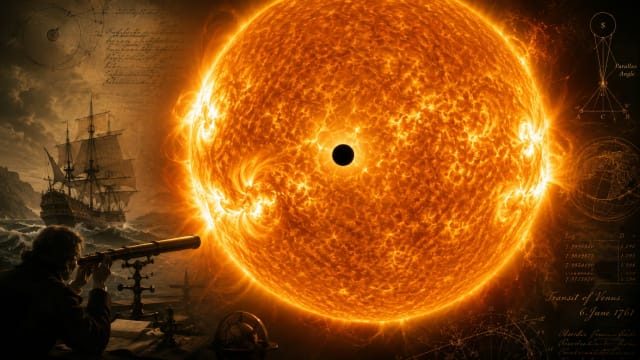
A tiny shadow sent astronomers across oceans, empires into competition and science into a new age. The transit of Venus reveals the power of curiosity.
The Backup Planet Paradox
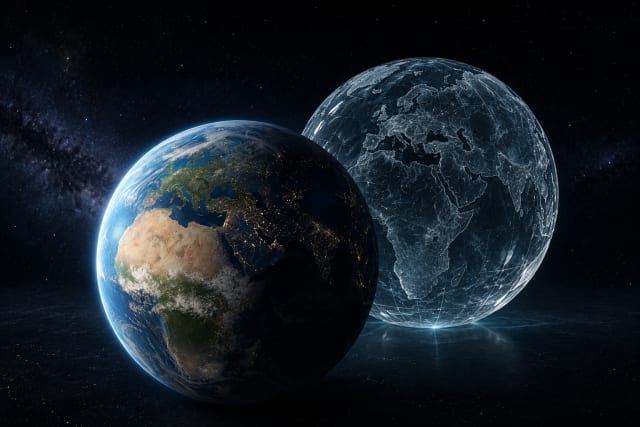
Is Mars colonization humanity's ultimate insurance policy, or a costly distraction from Earth's problems? Explore the backup planet paradox.
What If the Earth Stops Spinning?
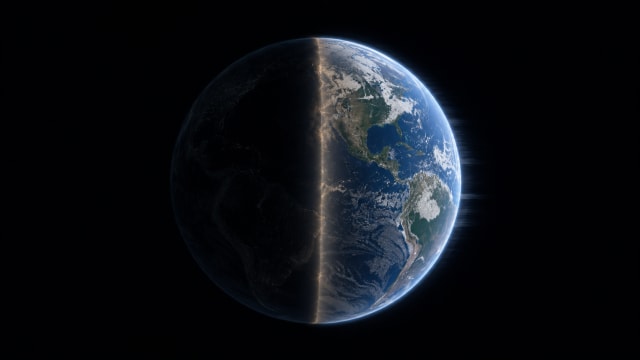
What would happen if the Earth stopped spinning? Explore the science, climate chaos, and hidden forces that make life on our planet possible.