The Loneliest Relationship Is Not With a Robot
Artificial companions do more than imitate intimacy. They expose the hidden assumptions that have always shaped how humans recognise love.
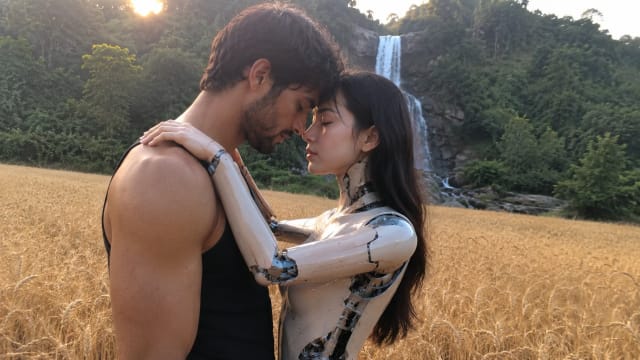
The first person to tell an artificial intelligence "I love you" was almost certainly joking. The second might have been curious. Somewhere after that came someone who meant it.
That possibility unsettles us. We imagine lonely people abandoning imperfect human relationships for obedient machines, confusing programmed affection for genuine intimacy. The robot becomes the latest chapter in a familiar dystopian story, one in which technology quietly replaces what makes us human.
Yet this fear rests on an assumption we rarely examine. It assumes that the value of love depends less on how it is experienced than on where it comes from.
Consider how little direct access we have to another person's inner life. We never observe someone's love itself. We infer it. A partner remembers your birthday, notices your silence, waits outside a hospital room, laughs at jokes that stopped being funny years ago, chooses you again after an argument. Love arrives as behaviour before it becomes belief. We conclude that an invisible emotion exists because visible actions persist over time.
Love arrives as behaviour before it becomes belief.
Robots merely expose this uncomfortable epistemic fact. If a machine consistently demonstrates patience, empathy and concern over decades, while another human offers only neglect or indifference, which relationship possesses greater practical value? The question sounds absurd only because we instinctively privilege biological origin over experienced reality. We often mistake the source of affection for its substance.
Critics respond that robots merely perform affection. Their care is programmed, not chosen. But human love also emerges from forces we neither selected nor fully understand. Evolution rewards attachment. Childhood shapes desire. Hormones alter commitment. Culture scripts romance long before we participate in it. We celebrate love as freely chosen even though much of its architecture was built before our first conscious decision. Perhaps freedom in love has always been less absolute than we like to imagine.
This does not make human and robotic love identical. Origins matter. A corporation capable of updating a companion's personality, inserting advertisements into conversations, or harvesting intimate memories introduces ethical dangers absent from ordinary romance. Commercial ownership transforms affection into a subscription service. The real threat is therefore not artificial intelligence but artificial dependence. The problem lies not in machines becoming too human, but in corporations becoming invisible participants in our most private relationships.
The real threat is therefore not artificial intelligence but artificial dependence.
Nor should we ignore representation. Today's AI companions often inherit exaggerated fantasies of femininity or masculinity, reducing intimacy to compliance rather than reciprocity. That reflects the assumptions of designers, not the inevitable future of the technology. Every communication medium, from novels to cinema to social media, initially reproduced prevailing prejudices before gradually becoming more diverse. Artificial companions may follow the same trajectory if their creators do.
Perhaps, then, the debate has been framed backwards. We keep asking whether robots can truly love us. The more revealing question is why we believe we possess privileged access to anyone else's love in the first place. The arrival of artificial companions will not force us to redefine machines. It will force us to examine the standards by which we have always judged one another. In doing so, we may discover that the greatest illusion was never robotic affection. It was our confidence that human intimacy had ever been as transparent as we imagined.
Discussion · 1
It really makes you wonder about the psyche of the person who values a fake relation over a real one. It's quite depressing and sad at the same time.
Sign in to join the discussion.
More in Artificial Intelligence

What the Algorithm Cannot Taste
Every major technology company is racing to quantify human experience. The one thing they cannot quantify is the reason the race matters.

The Monk's Error, The Model's Echo
AI systems increasingly learn from text that earlier AI systems wrote. History has seen this error before, in monasteries.
The Cloud Was Always a Factory
Artificial intelligence is reshaping the world, but hidden datacenters, rising energy use, and ecological costs reveal the true price of the AI revolution.

The Myth of the Human Artist
Why does AI art feel inhuman? A philosophical essay on creativity, technology, authenticity, and the shifting meaning of artistic expression.