The Myth of the Human Artist
Why does AI art feel inhuman? A philosophical essay on creativity, technology, authenticity, and the shifting meaning of artistic expression.

The factory whistle once governed the rhythm of industrial life. Workers woke to it, ate by it, and marched beneath its shrill authority. Today the sound feels almost absurd. It appears too rigid, too metallic, and too confident that human beings should organize themselves like machinery. Yet the first audiences who encountered jazz reacted with similar discomfort. They heard chaos where later generations would hear improvisation and freedom. Every new artistic language initially arrives as irritation because perception itself changes with history.
This pattern explains the strange hostility surrounding artificial intelligence generated art. The objection is rarely technical. Very few critics genuinely care how diffusion models assemble images or how language models predict words. Their anxiety is philosophical. For centuries art has functioned as evidence of uniquely human consciousness. A painting mattered because a hand trembled while creating it. A poem mattered because someone converted private suffering into language. The artistic object carried traces of mortality, memory, exhaustion, and desire. AI destabilizes this inheritance because it separates visible labor from aesthetic outcome.
Every new artistic language initially arrives as irritation because perception itself changes with history.
The standard criticism insists that machine generated art feels soulless. Yet this accusation quietly assumes that artistic value depends entirely on origin rather than experience. The history of art repeatedly undermines this assumption. Photography was once dismissed as mechanical reproduction incapable of genuine creativity. Critics feared that the camera would eliminate the artist because technology had replaced the hand. Electronic synthesizers provoked similar suspicion during the twentieth century. Traditional musicians accused them of sterilizing sound and replacing emotional depth with circuitry. Even the novel faced resistance during its rise because many intellectuals believed mass produced storytelling would degrade culture itself. In each case audiences confused unfamiliar procedure with absence of artistry.
What unsettles people about AI art is not the fantasy that machines suddenly became conscious creators. The deeper discomfort emerges from the realization that humans increasingly create through systems rather than directly through materials. The modern artist often resembles a curator of possibilities more than a solitary craftsman. A creator selects prompts, refines iterations, discards weak outputs, and guides probability toward coherence. Creativity migrates upward from execution toward orchestration. The sculptor no longer carves every inch of marble by hand. Instead he designs the quarry from which forms may emerge.
Creativity migrates upward from execution toward orchestration.
Some critics argue that this transition destroys authenticity altogether. Yet authenticity has never depended upon physical proximity between creator and artifact. A conductor does not play every instrument within a symphony orchestra. A film director may never touch the camera used to capture a scene. Architects rarely lay every brick within their buildings. Art has always involved layers of mediation hidden beneath romantic myths of solitary genius. Society simply ignored these systems when the human hand remained visibly present.
Perhaps AI generated art exposes a more unsettling truth about creativity itself. Much of human originality already depends upon recombination, inheritance, imitation, and unconscious borrowing. Writers absorb rhythms from books they barely remember reading. Painters internalize visual traditions before developing recognizable styles. Musicians rearrange structures inherited from forgotten predecessors. Human creativity has never emerged from pure emptiness. It has always operated through accumulated patterns that culture quietly recycles across generations.
The machine therefore does not destroy the romantic image of the artist. Instead it reveals how fragile that image always was. AI functions less as an alien intelligence and more as a mirror reflecting the procedural nature of human imagination back toward society. That reflection feels uncomfortable because modern culture still clings to the belief that creativity must remain mysterious in order to remain meaningful.
The future often sounds inhuman only until people learn how to hear it.
History suggests this discomfort will not last forever. Once audiences become fluent in a new artistic language the sense of artificiality slowly disappears. Innovation eventually settles into familiarity. What once appeared cold and mechanical becomes tradition. The factory whistle vanished into history. Jazz entered concert halls. Electronic music became mainstream culture. Perhaps artificial intelligence will follow the same trajectory. The future often sounds inhuman only until people learn how to hear it.
Discussion
Sign in to join the discussion.
More in Artificial Intelligence

What the Algorithm Cannot Taste
Every major technology company is racing to quantify human experience. The one thing they cannot quantify is the reason the race matters.
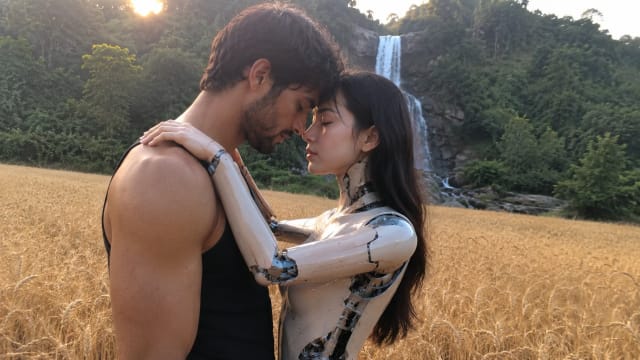
The Loneliest Relationship Is Not With a Robot
Artificial companions do more than imitate intimacy. They expose the hidden assumptions that have always shaped how humans recognise love.
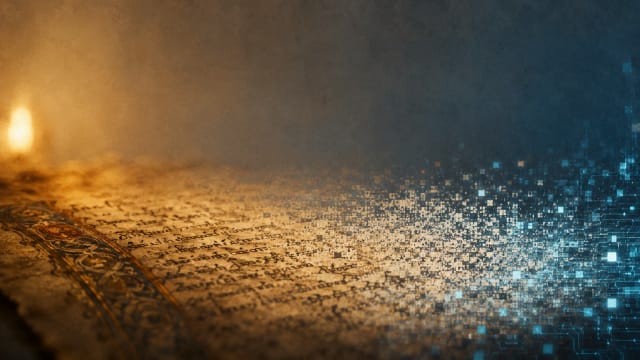
The Monk's Error, The Model's Echo
AI systems increasingly learn from text that earlier AI systems wrote. History has seen this error before, in monasteries.
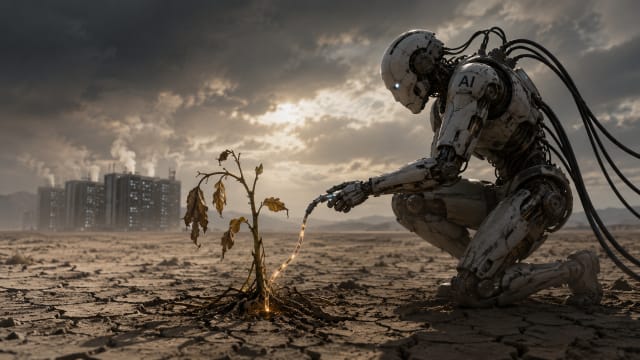
The Cloud Was Always a Factory
Artificial intelligence is reshaping the world, but hidden datacenters, rising energy use, and ecological costs reveal the true price of the AI revolution.