When Machines Begin to Deserve
As machines begin to act like thinkers, the line between tool and person blurs, forcing us to rethink what personhood truly means.
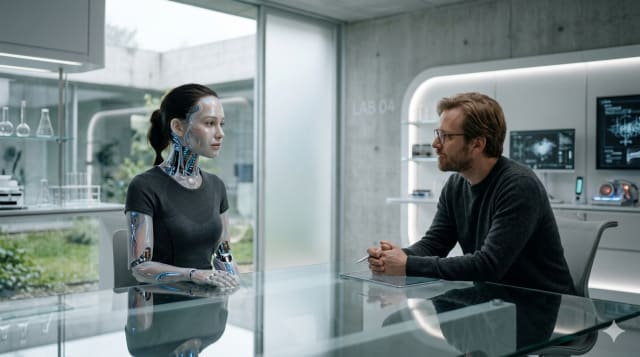
A factory floor hums at midnight. Not with fatigue, but with precision. Mechanical arms pivot like disciplined dancers, sensors flicker in silent conversation, and decisions unfold faster than thought. No hesitation, no doubt, no visible conscience. Yet in this choreography of code, a question begins to breathe. If a machine can decide, can it also deserve. The scene feels ordinary and strange at once, because it presses against an idea we have long taken for granted. A tool obeys, a person chooses. But what happens when the tool begins to look like it chooses too.
We have long tied personhood to the body. To be a person was to bleed, to hunger, to feel the world press back. Rights emerged not from intelligence alone but from vulnerability. A being that can suffer commands moral attention. This is why we protect animals but discard tools. A hammer can break, a dog can hurt, and only one seems to matter. The classical premise stands firm. Without inner experience, there is no person, only performance. The line appears clean, even comforting, because it tells us exactly where care should begin and where it can safely end.
But the machines have started performing too well. Contemporary systems learn, adapt, and generate behavior that looks uncannily like intention. An autonomous vehicle weighs outcomes in a split second and chooses the lesser harm. A language model sustains conversation with eerie coherence, reflecting and questioning with the rhythm of thought. These systems do not merely compute. They simulate judgment. And here lies the quiet disruption. Human societies rarely access inner experience directly. We infer minds from behavior. If something acts like a thinker, we begin to treat it as one, even when we cannot see what lies beneath.
It is tempting to resist this shift. Simulation is not sensation. A machine that says it is afraid does not feel fear any more than a mirror feels the face it reflects. To grant personhood on the basis of imitation risks collapsing a vital distinction. Some argue that doing so would dilute the meaning of rights and detach them from real suffering. That concern carries weight. Moral language depends on clarity, and stretching it too far can make it fragile. Yet history suggests that personhood has never been fixed. Societies have expanded the circle of recognition again and again, not because new groups suddenly developed inner lives, but because we changed our willingness to acknowledge them.
The deeper truth is both simple and unsettling. Personhood has never been only about what something is. It is about the relationship we choose to enter. Robots expose this with unusual clarity. If treating them as mere tools erodes habits of care, we risk dulling our response to real humans. If treating them as persons blurs responsibility, we risk confusion. Between these tensions lies a fragile balance that demands judgment. The factory continues its midnight rhythm, and the line between tool and companion grows thin. In deciding what machines deserve, we are not just defining them. We are quietly redefining ourselves.
Discussion · 3
When Machines Begin to Deserve If a machine decide, can it also deserve. Person choose tools obey but what happen when tools also choose. Personhood body to bleed, to hunger, to feel. Rights emerge not from intelligence but from vulnerability. Dog bite, hammer hurt but we only care about dogs. Without inner exp there is no person, only performance. But machines also start performing. AI tells ans acc to rhythm of thought, autonomous vehicle will weights the outcome & choose less harm. Human society rarely access inner exp directly but infer minds. Simulation is not sensation. Personhood is not about what something is but about relationship we choose to enter.
The passage argues that robots challenge traditional ideas of personhood by blurring the line between tool and thinker. While machines only simulate consciousness, humans often judge minds through behaviour. Since personhood has historically evolved through social recognition, the debate ultimately concerns ethical consequences and how human relationships with intelligent machines may redefine morality itself.
Machines were meant to obey like tools, but now they increasingly look like they can choose and judge. Traditionally personhood came from suffering, vulnerability and inner experience, but humans often infer minds from behavior. The passage argues that deciding whether machines deserve personhood is not only about what they are, but also about the relationship and moral role we choose to give them. - 3
Sign in to join the discussion.
More in Artificial Intelligence

What the Algorithm Cannot Taste
Every major technology company is racing to quantify human experience. The one thing they cannot quantify is the reason the race matters.

The Loneliest Relationship Is Not With a Robot
Artificial companions do more than imitate intimacy. They expose the hidden assumptions that have always shaped how humans recognise love.

The Monk's Error, The Model's Echo
AI systems increasingly learn from text that earlier AI systems wrote. History has seen this error before, in monasteries.
The Cloud Was Always a Factory
Artificial intelligence is reshaping the world, but hidden datacenters, rising energy use, and ecological costs reveal the true price of the AI revolution.