The Flaw Intel Called Rare
A professor found a division error in a Pentium chip in 1994, and a company answered with probabilities. The bill that followed was measured in hundreds of millions of dollars.

In October 1994 Thomas Nicely, a mathematician at Lynchburg College in Virginia, found that his Pentium computer gave slightly wrong answers to certain division problems. After weeks of checking he reported the fault to Intel, and by November word had spread across online forums.
Intel acknowledged that the chip contained an error, caused by missing entries in a lookup table used for division. It argued, however, that an average user would meet the fault once in about 27,000 years, and it at first offered replacements only to users who could show that their work needed high precision.
IBM then published its own analysis, which estimated that a heavy spreadsheet user might meet the error once every twenty four days, and in December 1994 it halted shipments of its Pentium computers.
The error was real but rare, and what made it costly was the way it was handled. Intel soon agreed to replace the chip for any owner who asked, and it was reported to have taken a charge of 475 million dollars against earnings.
The error was real but rare, and what made it costly was the way it was handled.
Defenders of Intel's first position note that its statistical claim for a typical user was probably sound, and that no company can replace every chip at the first sign of trouble. But customers had not bought a probability. They had bought a promise that the arithmetic of a computer could be trusted, and a rare failure of that promise proved more expensive than a frequent failure of something less basic.
Discussion
Sign in to join the discussion.
More in Business & Management

The Watchmakers Who Invented Quartz and Still Lost the Market
Switzerland built the first quartz watch prototypes and then watched Japan sell them. The standard story blames pride, but the real cause may lie in how the industry was organised.

The Giant That Declined a Small Partner and Defended Its Late Fees
Blockbuster is said to have turned down a chance to run Netflix, and the reasons were less foolish than the legend suggests.

The Cola That Won the Taste Tests and Lost the Public
A reformulated soft drink beat its rivals in a vast programme of blind tastings and was withdrawn within three months. The data were not wrong. The question was.
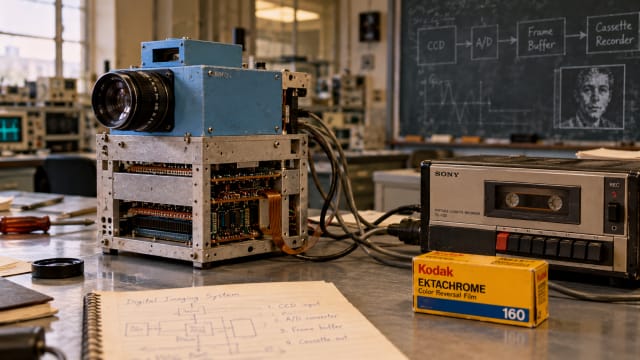
The Camera Kodak Built and the Business It Could Not Break
Kodak is said to have died because it ignored its own invention. The record suggests a harder problem, that the future can be seen clearly and still be unprofitable to enter.