The Watchmakers Who Invented Quartz and Still Lost the Market
Switzerland built the first quartz watch prototypes and then watched Japan sell them. The standard story blames pride, but the real cause may lie in how the industry was organised.

In 1967 researchers at a Swiss laboratory in Neuchâtel unveiled prototype wristwatches driven by a vibrating quartz crystal. The invention was Swiss, and the laboratory had been created by the industry itself. Within a few years, however, the commercial benefit went mostly to Japan, where Seiko had put the first quartz wristwatch on sale at the end of 1969.
The usual explanation is complacency. Swiss firms, the story goes, were so proud of their mechanical movements that they could not imagine a rival technology. This account is not quite fair. Swiss makers did bring quartz watches to market in the early 1970s, and they were not ignorant of the threat. Their difficulty lay in the structure of their industry, which was divided among many small specialists, each of which earned a living from a mechanical part that quartz made unnecessary.
Employment in the Swiss watch industry reportedly fell from about ninety thousand in 1970 to fewer than thirty thousand by the mid 1980s. Recovery came only after banks arranged a merger of the two largest groups and a cheap plastic watch, the Swatch, appeared in 1983.
The episode suggests that a firm may see a new technology clearly and still be unable to adopt it, because the arrangements that made it successful are the same ones that stand in the way.
Discussion
Sign in to join the discussion.
More in Business & Management

The Flaw Intel Called Rare
A professor found a division error in a Pentium chip in 1994, and a company answered with probabilities. The bill that followed was measured in hundreds of millions of dollars.

The Giant That Declined a Small Partner and Defended Its Late Fees
Blockbuster is said to have turned down a chance to run Netflix, and the reasons were less foolish than the legend suggests.

The Cola That Won the Taste Tests and Lost the Public
A reformulated soft drink beat its rivals in a vast programme of blind tastings and was withdrawn within three months. The data were not wrong. The question was.
The Camera Kodak Built and the Business It Could Not Break
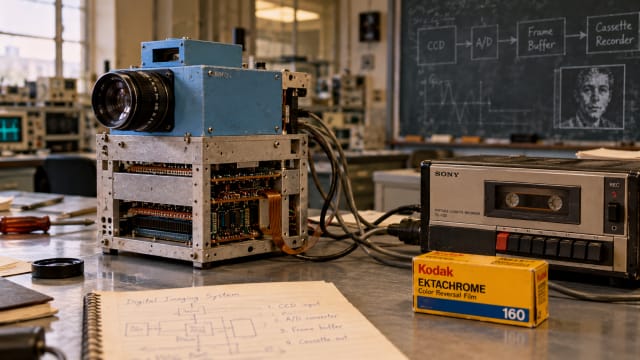
Kodak is said to have died because it ignored its own invention. The record suggests a harder problem, that the future can be seen clearly and still be unprofitable to enter.