What Did 1947 Actually Free Us From?
India's Independence ended colonial rule in 1947, but did it make Indians truly free? An essay on sovereignty, inequality and the unfinished meaning of freedom.
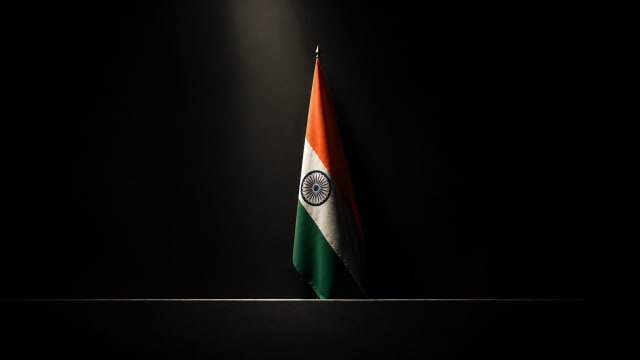
At midnight on 15 August 1947, India acquired something that colonial rule had denied it for nearly two centuries: the political authority to govern itself. The Union Jack descended, the tricolour rose, and an empire became a sovereign state. It is tempting, therefore, to treat independence as a completed act of liberation. But political independence and human freedom are not quite the same thing. The more unsettling question is not whether India became free in 1947, but what kind of freedom 1947 actually delivered.
Colonialism was, above all, an external authority. It placed the machinery of government, law and economic power beyond the democratic control of most Indians. Independence altered that fundamental relationship. Indians could now determine their political institutions, write their own laws and decide their collective future. In this sense, 1947 represented a genuine rupture. Sovereignty mattered because without the power to govern oneself, other forms of freedom remain precarious.
Yet sovereignty is only one meaning of freedom. A person can live under a government chosen by their own country and still lack the economic, social or intellectual conditions necessary to exercise meaningful agency. The end of foreign rule could not, by itself, abolish poverty, illiteracy, caste hierarchy, patriarchy or the inequalities embedded in everyday life. Nor could a change of political authority instantly erase institutions and habits inherited from the colonial past.
A country can become independent before its people become entirely free.
This distinction reveals two different ideas of liberty. One is freedom from domination: nobody else possesses the final authority over you. The other is freedom to act: you possess the rights, resources and social standing required to shape your own life. Independence achieved the first dramatically. The second had to be pursued within the political space that independence created.
There is, of course, a reasonable objection. To judge 1947 by asking why every form of inequality did not disappear with colonialism is to demand that political liberation perform work that no historical event could accomplish overnight. Nations emerge carrying the weight of their past. Institutions survive revolutions. Social hierarchies often outlive the governments that once regulated them. Independence should therefore not be understood as a failed attempt to create perfect freedom, but as the creation of conditions in which further freedoms could be contested and expanded.
But this defence leads to an uncomfortable conclusion. If independence created the possibility of freedom rather than freedom itself, then independence cannot be treated merely as an inheritance. It becomes an unfinished responsibility.
Every generation receives political rights created by people it never knew. It also inherits inequalities it did not create and institutions it did not design. The danger is that inherited freedom becomes invisible. What one generation fought to obtain, another may mistake for a permanent feature of the world.
Perhaps this is why the most important question on Independence Day is not simply what India achieved in 1947. It is what Indians have done, and continue to do, with the freedom that 1947 made possible.
A flag can mark the end of foreign rule. It cannot guarantee freedom.
Independence is the moment a people acquire the right to govern themselves. Freedom is the much harder question of what they do with that right.
Discussion
Sign in to join the discussion.
More in Indian History
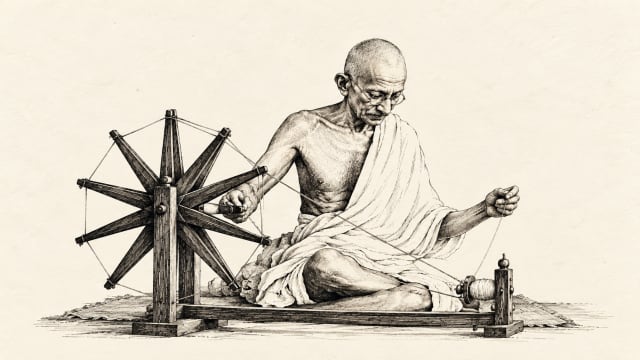
The Prize Gandhi Never Won
The Norwegian Nobel Committee considered Gandhi five times and never honoured him. Its reasons were serious, and they may say more about the meaning of peace than about the man.
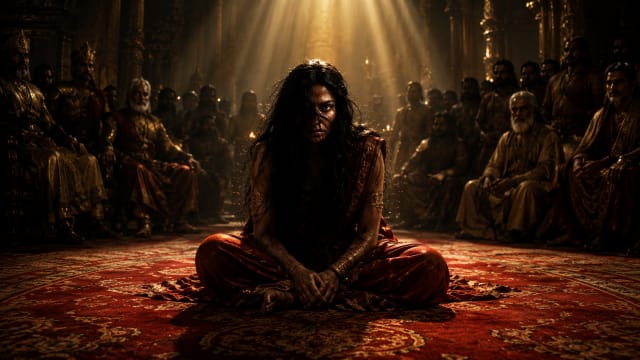
The Silence Around Draupadi
A powerful reflection on Draupadi’s humiliation, memory, rage, and moral clarity in the Mahabharata through a modern philosophical lens.

The Golden Sparrow: A Diagnostic of Indian History
Explore why India was called the Golden Sparrow and how wealth, culture and political fragmentation shaped Indian history for centuries.

When Knowledge Burned: The Fall of Nalanda
Nalanda’s burning erased more than books. It shattered a living tradition of knowledge, showing how fragile the continuity of thought truly is.