Marmots - Stillness Is Vigilance
A marmot’s stillness is not peace but vigilance, a lesson in survival where calm disguises constant calculation and life depends on attention.

On a high meadow where the wind moves like an old thought, a creature rises on its hind legs and becomes, for a moment, a question mark against the sky. The marmot does not rush. It listens. Its stillness feels like contemplation, as if the mountain itself has grown a small, watchful mind.
The temptation is to read philosophy into this posture. We see the upright stance, the measured gaze, and imagine reflection. Yet the marmot is not thinking in the way we flatter ourselves to think. It is calculating. Its pause is not wonder but wager. In that narrow interval between movement and alarm, it weighs the world with brutal efficiency. Shadow or eagle, silence or threat, life or the sudden end of it. What looks like serenity is, in fact, compressed urgency.
This confusion is instructive. Humans have long mistaken stillness for depth. We inherit a tradition that places wisdom in quiet poses, from sages beneath trees to scholars bent over texts. The marmot seems to echo this lineage, a small monk of the alpine. But nature is rarely so indulgent. Evolution does not reward appearances. It rewards outcomes. The marmot stands not to ponder existence but to extend survival by a few decisive seconds.
Some will insist that such a view diminishes the animal, that it strips the world of poetry and replaces it with cold mechanism. They argue that the value of the marmot lies in its symbolic power, in what it allows us to imagine about ourselves. But this reverses the order of truth. The poetry is not lost when we see clearly. It is sharpened. To recognize that the marmot’s stillness is a form of vigilance is to glimpse a deeper aesthetic, one where beauty lies in function, and grace emerges from necessity.
The burrow beneath the marmot tells the same story. It is not merely a shelter but an argument carved into earth. Life persists by anticipating danger. It prepares exits before they are needed. The colony survives not through heroics but through shared awareness. Each member is a sensor. Each whistle is a signal that collapses hesitation into action. In this, the marmot offers a model more precise than any metaphor we project onto it.
And yet, standing at a distance, we continue to misread it. Perhaps we must. The human mind resists a world stripped of narrative comfort. We prefer to see ourselves reflected in the animal. We believe that the calm we witness is akin to the calm we seek. But the marmot’s lesson is less flattering and more useful. It suggests that what we call peace may often be readiness. What we call thought may be refined instinct. Survival itself has a posture.
Look longer and the posture begins to change its meaning. The upright body is not just a signal of alertness, it is a negotiation with risk. The eyes sweep the horizon not out of curiosity, but out of obligation. To miss a movement is to accept extinction. In this sense the marmot lives at a pitch of attention that humans rarely sustain. Our distractions are luxuries. Its focus is law.
There is also a quiet economy to this life. The marmot does not waste motion. It eats, it rests, it watches, it retreats. Even its long sleep through winter is not indulgence but strategy, a suspension that preserves energy when the world offers none. Time itself becomes a resource to be managed, not merely endured. In this disciplined rhythm, the animal refines existence into essentials.
The small figure in the meadow resolves, then, into something sharper than a symbol. It is a reminder that clarity begins where illusion ends. The marmot does not contemplate the world. It meets it as it is. It lives.
Discussion
Sign in to join the discussion.
More in Animals
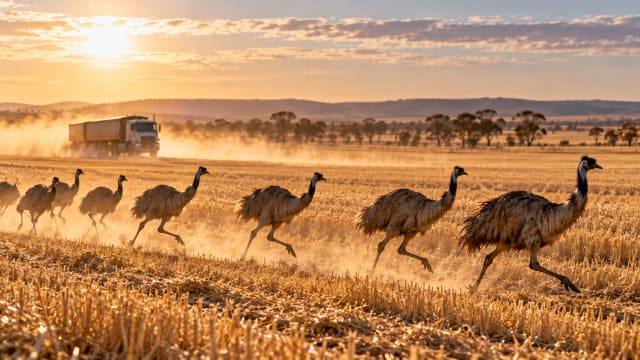
The Emu War and the Problem Soldiers Could Not Shoot
In 1932 machine guns were sent against emus in Western Australia, and the birds won the first round. The story is usually told as comedy, yet it hides a real question about what kind of problem an army can solve.
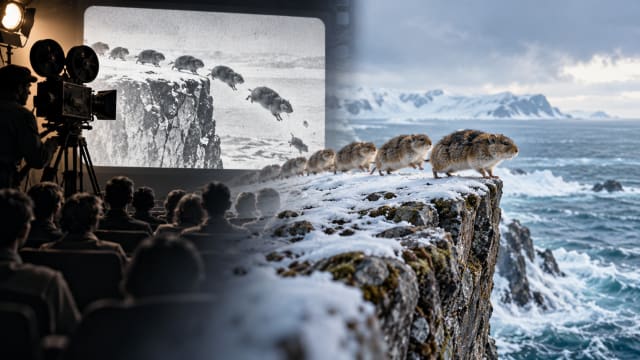
The Cliff That Was Built - An RC Inspired by IIM Indore
A famous film showed lemmings marching to their deaths in 1958. The scene was staged, and the myth it fed says more about the audience than about the animal.
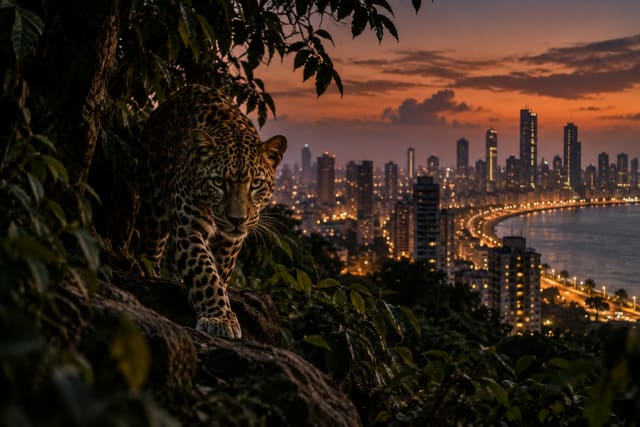
The Leopard That Moved Back to Mumbai: An RC Inspired by IIM Indore
47 leopards live inside Sanjay Gandhi National Park, entirely surrounded by Mumbai. They have killed more than thirty people since 2002. Neither the city nor the leopards are going anywhere.
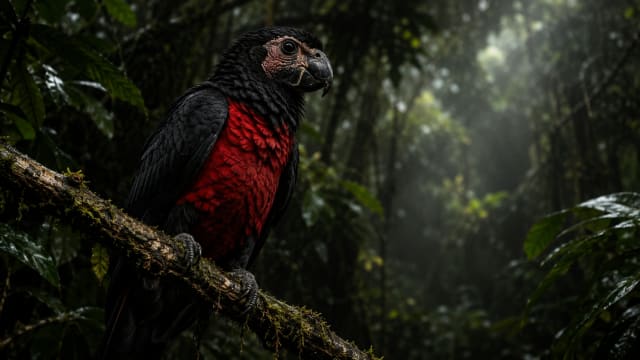
The Parrot That Bets Everything on One Fig: An RC Inspired by IIM Indore
The Dracula Parrot eats almost nothing but figs from a single genus of tree. Its beauty is the product of extreme specialisation. So is its vulnerability.