The Beautiful Predator: Inside the Strange World of the Portuguese Man o’ War
Explore the Portuguese man o’ war, the venomous ocean drifter that challenges ideas of beauty, individuality, and survival in nature.

The Portuguese man o’ war looks almost decorative while floating across tropical oceans. Its translucent sail glows blue and violet beneath sunlight, and from a distance it resembles a fragile plastic toy drifting on the waves. Marine biologists, however, warn swimmers to keep away from it. Beneath the surface hangs a network of tentacles that can stretch for dozens of metres and deliver intensely painful stings. “People often underestimate them because they appear delicate,” says jellyfish researcher Lisa-ann Gershwin. “But they are among the ocean’s most effective venomous predators.”
Despite its jellyfish-like appearance, the Portuguese man o’ war is not actually a jellyfish. It belongs to a bizarre group of organisms known as siphonophores. A siphonophore is not one creature but a colony composed of specialized living units called zooids. Each zooid performs a different task. Some digest food, some reproduce, some sting prey, and some maintain flotation. Individually, these zooids cannot survive. Together, they function as a single drifting organism.
“The Portuguese man o’ war challenges our idea of what an individual animal even is,” says marine ecologist Stefan Siebert. “It behaves as one creature, but biologically it is more like an alliance.”
The organism’s most recognizable feature is its gas-filled float, which rises above the water like the sail of an old warship. Early Portuguese sailors thought it resembled the armed caravels used during the Age of Exploration, which is how the creature received its unusual name. Winds push the float across oceans while the tentacles trail invisibly beneath the surface.
Those tentacles contain thousands of microscopic stinging capsules called nematocysts. When triggered, each capsule fires a tiny venom-filled barb into the skin of prey. Fish are often paralyzed instantly. Humans usually survive encounters, though the experience can be severe. Victims commonly report burning pain, raised welts, muscle cramps, nausea, fever, and anxiety. Even detached tentacles washed onto beaches can still sting.
Marine researchers have observed that Portuguese man o’ wars drift in enormous groups called blooms. During certain seasons, beaches in Australia, Florida, and parts of the Indian Ocean become covered with them. Some scientists think wind patterns and warming ocean temperatures may influence these mass appearances, though the exact mechanisms remain uncertain.
What fascinates biologists most is not merely the venom but the creature’s structure. Most animals possess a central nervous system that coordinates behavior. The Portuguese man o’ war does not. It has no brain making decisions and no commander directing the colony. Yet the organism can hunt, feed, reproduce, and survive in open oceans with remarkable efficiency.
“It’s a reminder that evolution can solve problems in ways humans would never design,” says zoologist Casey Dunn. “Nature does not always prioritize individuality.”
That idea unsettles many people. Humans tend to imagine life as something organized around a single self. The Portuguese man o’ war ignores that logic entirely. Its survival depends on cooperation between dependent parts that cannot live alone.
The creature also reveals something deeper about the natural world. Humans often separate beauty from danger, as if elegance should signal harmlessness. The Portuguese man o’ war dissolves that illusion. Its glowing sail looks jewel-like beneath sunlight, yet beneath that beauty drifts one of the ocean’s most painful defenses. In nature, appearance and intention rarely align as neatly as humans expect.
Discussion · 3
Amazing
human philosophi with biological marine creature. great eaasy
The essay seemed easy to read, but the questions devastated my assumption that I had clearly understood the essay. This essay is similar to what it says: "An easy-looking passage can also be a marks-killer." Just like this marine creature, the text hides its venomous questions only to reveal how much work one has to do logically to understand the arguments made in the passage.
Sign in to join the discussion.
More in Animals

The Emu War and the Problem Soldiers Could Not Shoot
In 1932 machine guns were sent against emus in Western Australia, and the birds won the first round. The story is usually told as comedy, yet it hides a real question about what kind of problem an army can solve.

The Cliff That Was Built - An RC Inspired by IIM Indore
A famous film showed lemmings marching to their deaths in 1958. The scene was staged, and the myth it fed says more about the audience than about the animal.
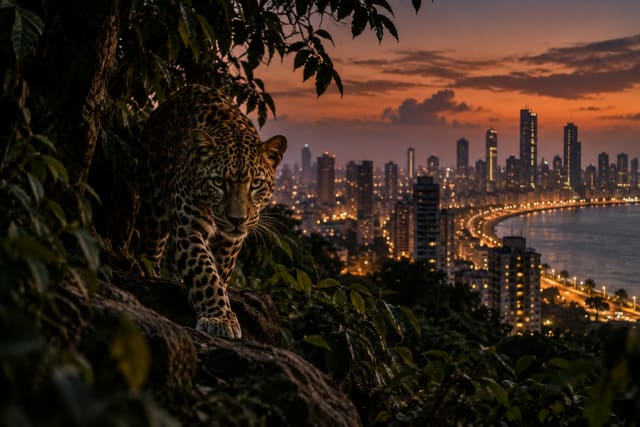
The Leopard That Moved Back to Mumbai: An RC Inspired by IIM Indore
47 leopards live inside Sanjay Gandhi National Park, entirely surrounded by Mumbai. They have killed more than thirty people since 2002. Neither the city nor the leopards are going anywhere.
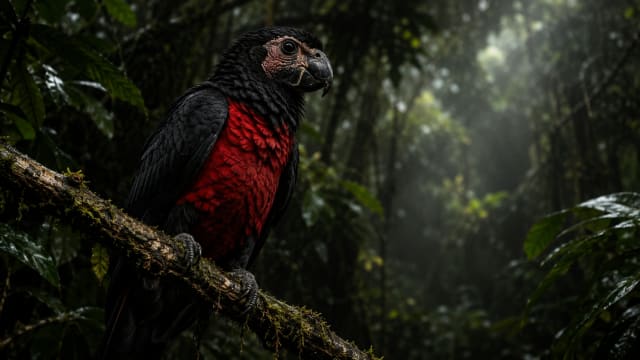
The Parrot That Bets Everything on One Fig: An RC Inspired by IIM Indore
The Dracula Parrot eats almost nothing but figs from a single genus of tree. Its beauty is the product of extreme specialisation. So is its vulnerability.