The Wisdom of Crowds
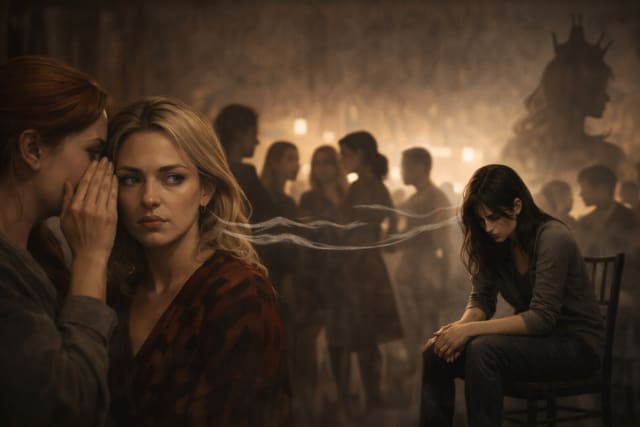
A Victorian scientist set out to prove that ordinary people judge badly and found a crowd that was almost exactly right. The trouble is what happens once the crowd starts to talk.
GRADFLIX Editors4 Qs · Hard
How groups, norms and situations change individual behaviour.
7 long-form social psychology essays, written at the density of real CAT passages, each with CAT, XAT and GMAT-style questions and explanations. For real exam passages, practise the solved CAT RC PYQs; for a daily routine, see CAT RC practice.
A Victorian scientist set out to prove that ordinary people judge badly and found a crowd that was almost exactly right. The trouble is what happens once the crowd starts to talk.
A newspaper once told New York that dozens of neighbours watched a murder and did nothing. The story built a famous theory, and then the story itself began to fall apart.
In 1971 a Stanford basement became a prison, and the world learned that ordinary people turn cruel when given power. The archive suggests that somebody told the guards what the experiment wanted to see.
A penguin's pebble looks like a gift of love. It may actually be a signal of competence—a clue to how human courtship really works.
A concise exploration of whether destructive patterns can emerge from traditionally feminine traits.
Porn addiction is less a crisis of libido than a crisis of limitless novelty. In an age of algorithmic abundance, desire is no longer courted.
When the scripts we inherit fail, we confront the unsettling fact that meaning is not discovered but made. In that fracture lies a quiet, difficult freedom.