The Stanford Prison Experiment Was Directed - An RC Inspired by IIM Indore
In 1971 a Stanford basement became a prison, and the world learned that ordinary people turn cruel when given power. The archive suggests that somebody told the guards what the experiment wanted to see.
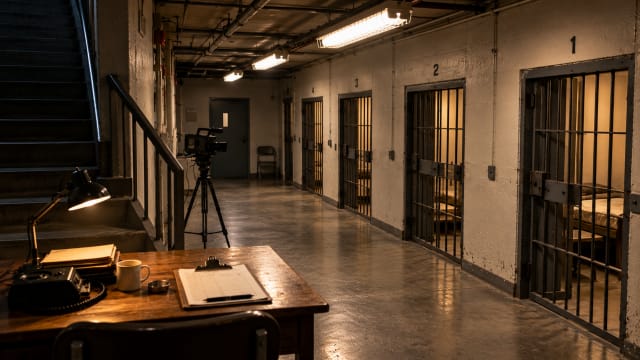
In August 1971 the psychologist Philip Zimbardo turned the basement of a Stanford University building into a mock prison and paid about two dozen young men fifteen dollars a day to play guards and prisoners. The study was meant to last two weeks. It was stopped after six days, when the guards had grown cruel and several prisoners had broken down. For half a century the lesson drawn from it has been that ordinary people handed power will abuse it without being told to.
The study became a staple of textbooks and documentaries, and it was invoked in 2004 to explain the abuse of prisoners at Abu Ghraib, where Zimbardo later testified for the defence of one of the soldiers charged. Textbooks presented it as proof and films retold it as a warning, and few readers went back to ask how the guards had been prepared. Its appeal lay in its simplicity. A role, a uniform and a locked door seemed enough to turn a student into a tormentor.
The archive tells a less tidy story. In 2018 the French researcher Thibault Le Texier, working through recordings and notes held at Stanford, reported that the guards had been briefed before the study began. They were encouraged to produce fear and a sense of powerlessness in the prisoners, and staff members later urged some of the gentler guards to be harsher. The guard nicknamed John Wayne, Dave Eshleman, has said that he was playing a part modelled on a film villain.
This changes what was demonstrated. A study in which participants are told what the experimenters hope to see cannot show what they would do unprompted. A cruelty that has been requested cannot be offered as proof of what people do when nobody asks. Critics raised this objection within a few years of the original report, using the term demand characteristics for the pressure to please an experimenter, yet the finding survived because it was so easy to remember.
A cruelty that has been requested cannot be offered as proof of what people do when nobody asks.
Defenders reply that the guards still chose how far to go. Zimbardo has maintained that his instructions were mild and that many guards went well beyond them. That is partly true, since the guards at Stanford did not behave alike and some were described as fair. But variation among guards is not what the original claim predicted. The claim was that the situation writes the script, and a script that had to be handed out beforehand weakens that claim even if it does not destroy it.
Other work points the same way. In the BBC Prison Study of 2002 the psychologists Alex Haslam and Stephen Reicher gave their guards no instructions, and the guards proved reluctant to use their authority while the prisoners organised against them. The regime collapsed within days, though a small group later tried to set up a harsher order.
That leaves a stranger question than the one the original study posed. If people become cruel when they believe that a respected authority wants it, then the cruelty was real even if the experiment was not. What the Stanford basement may have revealed is how little it takes for a person to hear permission in a few nods and a clipboard, and nobody has yet explained who wrote the permission that they thought they heard.
Discussion
Sign in to join the discussion.
More in Social Psychology

The Thirty Eight Witnesses Who Were Not There - An RC Inspired by IIM Indore
A newspaper once told New York that dozens of neighbours watched a murder and did nothing. The story built a famous theory, and then the story itself began to fall apart.
The Sane Who Were Never Caught - An RC Inspired by IIM Indore
In 1973 a Stanford psychologist reported that psychiatrists could not tell healthy people from the mentally ill. Half a century later, the study itself is proving hard to tell from fiction.

The Pebble Is Not a Love Letter
A penguin's pebble looks like a gift of love. It may actually be a signal of competence—a clue to how human courtship really works.

Machiavellianism and the Price of Power
A concise reflection on Machiavellianism that shows how power reshapes morality, revealing a quiet tension between survival and integrity.