Gravity Is the Story of Love
As physicists explore the Big Rip, a deeper question emerges. Is gravity merely a force, or the universe's oldest form of connection?
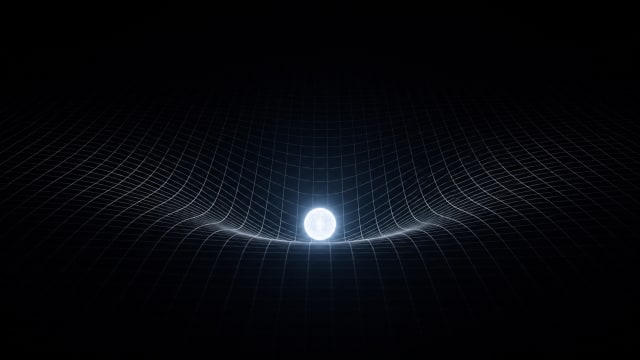
What is the most important force in the universe?
Most people would answer gravity. Without it, planets would never form, stars would never ignite, and galaxies would dissolve into scattered clouds of matter. Gravity shapes the architecture of the cosmos.
Yet perhaps gravity is more than a force. Perhaps it is the universe's oldest expression of a deeper principle. The principle that separate things can become one.
The history of the universe is, in many ways, the history of gravity's victories. After the Big Bang, matter rushed outward through expanding space. Left alone, those particles would have continued drifting apart. Gravity changed the story. It gathered diffuse clouds of gas into stars. Inside those stars, heavier elements were forged. Carbon, oxygen, iron, and calcium emerged from stellar furnaces and eventually became planets, oceans, forests, and people.
Gravity gathers matter into stars. Attachment gathers individuals into families. Trust gathers strangers into societies.
Human beings are therefore not separate from gravity's work. We are among its consequences.
In 1998, two teams of astronomers studying distant supernovae uncovered a result that transformed modern cosmology. The universe was not merely expanding. Its expansion was accelerating. Something appeared to be pushing the cosmos apart faster and faster. Physicists named this phenomenon dark energy, though the name explained little.
Several years later, the physicists Robert Caldwell, Marc Kamionkowski, and Nevin Weinberg explored a startling possibility. If dark energy were to grow stronger over time, it could eventually overpower gravity itself. Their scenario became known as the Big Rip.
The implications were extraordinary. Galaxies would drift beyond one another's reach. Solar systems would unravel. Planets would abandon their stars. Stars would lose their structure. Eventually even atoms would be torn apart by the relentless stretching of space.
The universe would not end in an explosion. It would end in separation.
At first glance, comparing gravity with love seems absurd. Love belongs to poetry. Gravity belongs to physics. One inhabits the human heart while the other governs the motion of galaxies.
Yet the comparison is not about what these forces are. It is about what they accomplish.
Across disciplines, a remarkably similar pattern appears. Developmental psychologists have found that secure attachment allows children to flourish emotionally and socially. Sociologists have repeatedly shown that communities rich in trust tend to be healthier, safer, and more resilient. Different fields use different languages, yet they often arrive at the same conclusion. Strong relationships create stable structures.
This may explain why the Big Rip feels uniquely unsettling. Other visions of cosmic destruction involve violence. Asteroids collide. Stars explode. Black holes consume. Such endings possess a certain drama. The Big Rip offers something colder. It imagines a universe where relationships themselves become impossible.
The universe would not die in fire. It would die through separation.
Perhaps our fear of loneliness is rooted deeper than psychology. Long before human beings wondered what it meant to belong, the cosmos had already demonstrated a fundamental truth. Complexity emerges when separate things remain bound together. Remove the bonds and the structures disappear.
Seen this way, gravity becomes more than a chapter in physics. It becomes a symbol of one of reality's deepest patterns. The universe creates stars, planets, and people not by pushing things apart, but by bringing them together.
And perhaps that is why the Big Rip feels so haunting. It is not merely a theory about the end of the universe. It is a vision of a cosmos where the oldest principle of creation finally loses its grip.
For the first time since the birth of the stars, nothing remains together.
Discussion · 3
Love and gravity share a similar nature as they both create and sustain connections. Gravity creates stars, planets, and ultimately human life, while attachment and trust create healthy individuals and societies. In contrast, there is a phenomenon of Big Rip which would be the end of the universe in which dark energy eventually overcomes gravity, causing everything to separate and bringing an end to the principle of connection that has shaped the cosmos.
The author shared an analogy here between gravity and love where he suggests that gravity or love is the bounding force which bounds people together whereas the big rip is the dissecting force that dissect peoples. this essay is not cosmological rather than it is more philosophical taking an analogy from cosmological events.
The summary of this essay is that there is an uncanny similarity between gravity in the cosmos and the emotion of love within human beings. Both act as forces that can alter and shape the course of life in the universe. Gravity, being the stabilising force, keeps planets, stars, galaxies, and even atoms intact, while dark energy is presented as the opposing force that could eventually overpower gravity and lead to the Big Rip in the universe. The Big Rip is described not as a loud explosion, but as a quiet dismantling of proximity and connection between celestial bodies and atoms, ultimately leading to instability and separation. A similar phenomenon can be observed in human relationships and emotions. A household strengthened by love stands stable and united, while the absence of love causes people to drift apart. Thus, the essay suggests that both the universe and human life survive through forces that bind things together.
Sign in to join the discussion.
More in Space & Astronomy
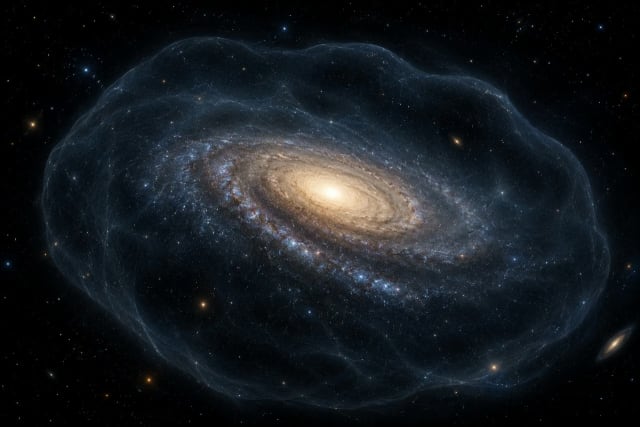
What Dark Matter Tells Us About Scientific Knowledge: An RC Inspired by IIM Indore
Dark matter has never been directly observed. We are nonetheless highly confident it exists. The gap between these two facts reveals something important about how science actually works.
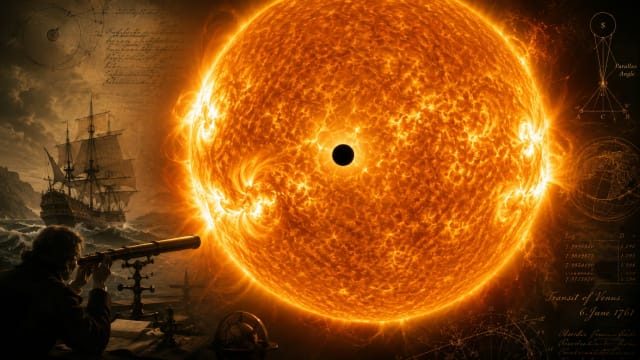
Chasing Shadows
A tiny shadow sent astronomers across oceans, empires into competition and science into a new age. The transit of Venus reveals the power of curiosity.
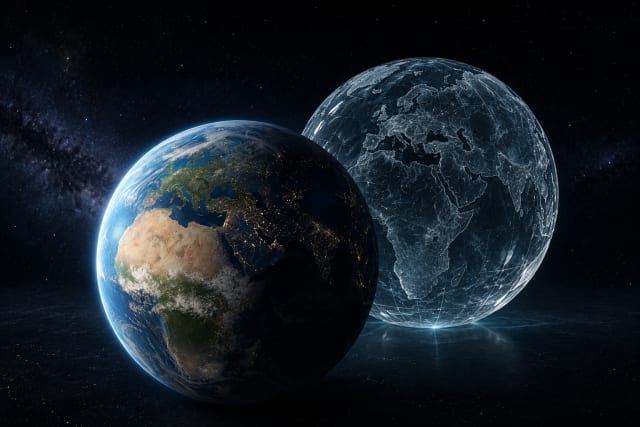
The Backup Planet Paradox
Is Mars colonization humanity's ultimate insurance policy, or a costly distraction from Earth's problems? Explore the backup planet paradox.
What If the Earth Stops Spinning?
What would happen if the Earth stopped spinning? Explore the science, climate chaos, and hidden forces that make life on our planet possible.