The Search for Alien Life Is Secretly a Search for Human Uniqueness
Why humanity’s search for alien life is really a search for meaning, uniqueness, and our place in a silent universe.
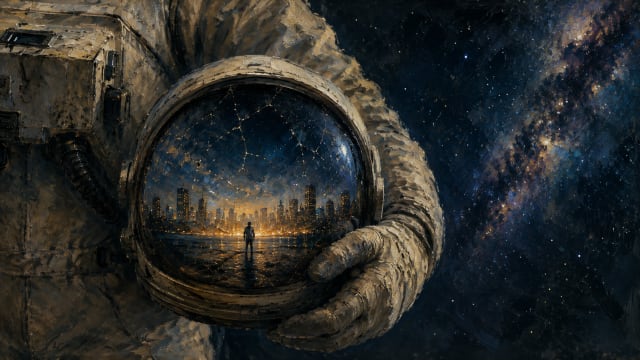
For decades, radio telescopes have listened to the sky like monks waiting for revelation. In deserts, frozen valleys, and mountain observatories, giant metallic dishes continue staring into a darkness that never answers. The silence disturbs humanity in a strangely intimate way. We claim to search for alien life out of scientific curiosity. Yet beneath the machinery and mathematics lies a quieter fear. Humanity may not be as unique as it once believed.
The alien frequently becomes a disguised mirror.
Astronomers often describe the search for extraterrestrial intelligence as a technical exercise. Scientists study exoplanets, atmospheric chemistry, radio frequencies, and probability models. Projects such as SETI rely on empirical methods rather than fantasy. Still, the emotional gravity surrounding the search cannot be explained through science alone. Humans are not merely asking whether life exists elsewhere in the universe. They are asking whether intelligence itself is ordinary.
For most of history, civilizations imagined humanity at the center of creation. Ancient religions placed Earth at the heart of cosmic design and treated consciousness as a sacred exception. Copernicus weakened that certainty by removing Earth from the center of the heavens. Darwin damaged it further by revealing that humans emerged from the same evolutionary struggle that shaped every other species. The search for alien life threatens the final layer of psychological centrality. If intelligent civilizations exist everywhere, then consciousness may not represent destiny or divine privilege. Humanity becomes one biological event among countless others scattered across indifferent galaxies.
Curiously, the aliens humans imagine often resemble humans themselves. Science fiction overflows with extraterrestrial empires, political rivalries, hierarchies, and moral conflicts. Even creatures designed to appear radically unfamiliar still carry traces of human behavior and emotion. The alien becomes a projection screen for earthly anxieties. Perhaps this reveals the limits of imagination itself. Human beings struggle to picture intelligence without reproducing some version of their own desires and fears.
The silence of the cosmos ceases to feel astronomical. It becomes autobiographical.
Some scientists reject these philosophical interpretations entirely. They argue that the search for alien life is simply a matter of evidence and probability. Given the number of stars and planets in the observable universe, it would seem statistically unlikely for Earth to host the only intelligent species. This reasoning carries enormous scientific force. Yet even detached calculations produce emotional consequences. Discovering microbial organisms beneath the ice of Europa would instantly alter religion, philosophy, and politics. A distant radio signal from another civilization would transform humanity’s understanding of itself long before scientists fully understood the message.
The most haunting possibility, however, is silence. The Fermi Paradox asks a disturbing question. If intelligent life should be common, why has nobody appeared? Perhaps advanced civilizations destroy themselves through ecological collapse, technological instability, or war. Perhaps consciousness is fragile and temporary. In that case, the silence of the cosmos stops feeling astronomical. It starts feeling autobiographical. Humanity begins hearing its own future echo through empty space.
We look outward in order to understand what lies beyond us, yet every discovery circles back toward the question of who we are.
The search for alien life therefore reveals something paradoxical about the human condition. We gaze outward in order to understand the universe, yet every discovery returns us to ourselves. The cosmos functions less like a frontier than a mirror. Whether humanity eventually discovers extraterrestrial life or confronts eternal silence, the result will wound some ancient belief about our special place in existence. The universe may contain countless minds, or only one lonely species staring nervously into the dark. Either possibility forces humanity to reconsider the story it tells about itself.
Discussion · 1
The pain that questions have inflicted on my psyche is beyond observable universe. 🥲
Sign in to join the discussion.
More in Space & Astronomy
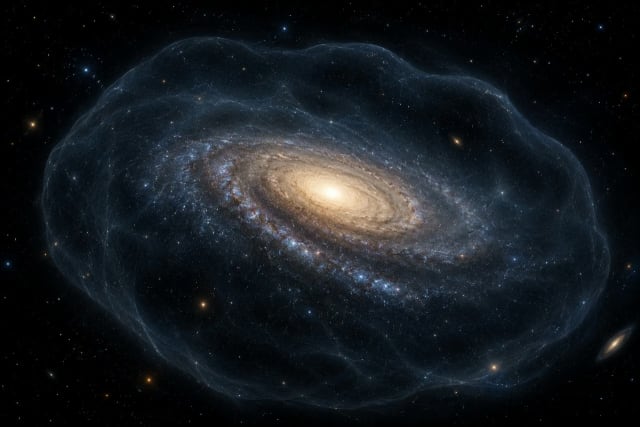
What Dark Matter Tells Us About Scientific Knowledge: An RC Inspired by IIM Indore
Dark matter has never been directly observed. We are nonetheless highly confident it exists. The gap between these two facts reveals something important about how science actually works.
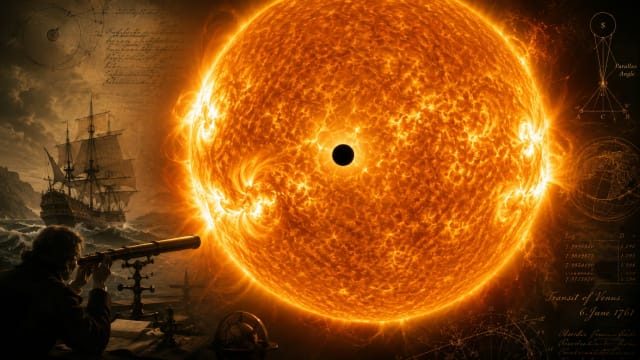
Chasing Shadows
A tiny shadow sent astronomers across oceans, empires into competition and science into a new age. The transit of Venus reveals the power of curiosity.
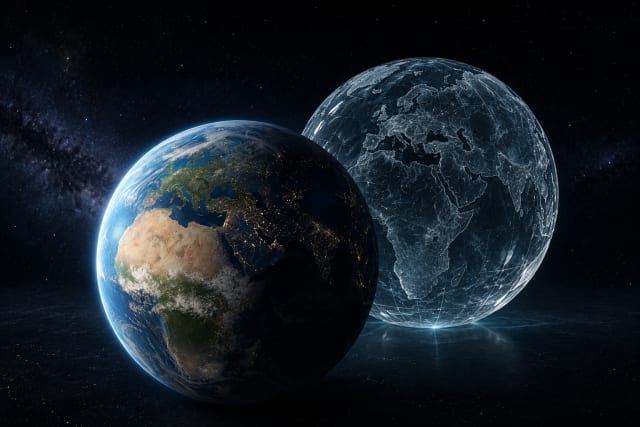
The Backup Planet Paradox
Is Mars colonization humanity's ultimate insurance policy, or a costly distraction from Earth's problems? Explore the backup planet paradox.
What If the Earth Stops Spinning?
What would happen if the Earth stopped spinning? Explore the science, climate chaos, and hidden forces that make life on our planet possible.