The Silence Between Stars
A meditation on the cosmic silence that surrounds us, this essay explores whether humanity is a rare accident or part of a vast, unseen community. It argues that the question of being alone reveals less about the universe and more about the limits of human perception and responsibility.
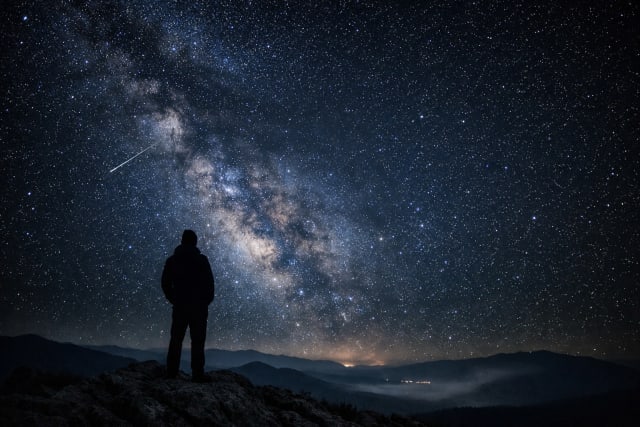
On certain winter nights, when the sky hardens into a black mirror pricked with cold fire, the question stops being abstract and becomes almost physical. You look up and something in you tilts. The stars are too many, too distant, too indifferent. They suggest a universe that does not need us, yet here we are, asking if anyone else made it this far. The feeling is not wonder alone but dislocation, as if consciousness itself were misplaced in an ocean of silence.
The logic of abundance seems straightforward. The observable universe contains hundreds of billions of galaxies, each with hundreds of billions of stars. Around many of these stars orbit planets, and among those planets, some must fall within the narrow band where water flows and chemistry awakens. Given time, matter experiments. Life begins to look less like a miracle and more like an expectation. The arithmetic leans toward company.
Yet the sky offers no reply, and this absence sharpens into what is known as the Fermi paradox. If life is common and intelligence emerges even occasionally, the universe should already be loud with evidence. Civilizations should expand, signals should travel, traces should remain. But nothing unmistakable appears. One explanation is that intelligence is rare, a fragile detour in evolution rather than its goal. Another is more unsettling, that intelligence tends to destroy itself before it can cross the distances between stars, turning the cosmos into a quiet archive of failed beginnings.
There is, however, a gentler counterargument. Perhaps the universe is not late but early. The elements required for life had to be forged, planets had to stabilize, conditions had to align. It may be that we exist near the opening act of a much longer drama. Or perhaps we are searching incorrectly, expecting signals that resemble our own logic. An alien intelligence might not broadcast, might not expand, might not even be recognizable as life in our terms. The fault may lie not in the stars but in our assumptions.
The deeper insight is that the question itself exposes the limits of human intuition. We evolved for survival, not for interpreting infinity. When we call the universe silent, we assume it speaks a language we should understand. Either life is abundant and we have not yet learned how to listen, or it is vanishingly rare and we are an exception of staggering improbability. Both possibilities converge on the same demand. To endure, to inquire, and to act with care. Because if we are not alone, we are part of a vast unfolding story, and if we are, then we are its only known witnesses.
Discussion
Sign in to join the discussion.
More in Space & Astronomy
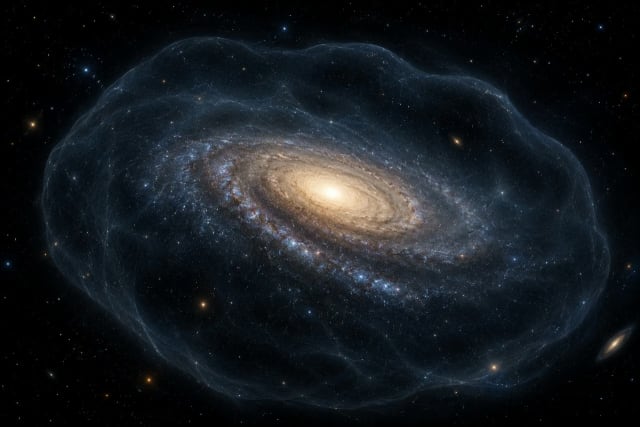
What Dark Matter Tells Us About Scientific Knowledge: An RC Inspired by IIM Indore
Dark matter has never been directly observed. We are nonetheless highly confident it exists. The gap between these two facts reveals something important about how science actually works.
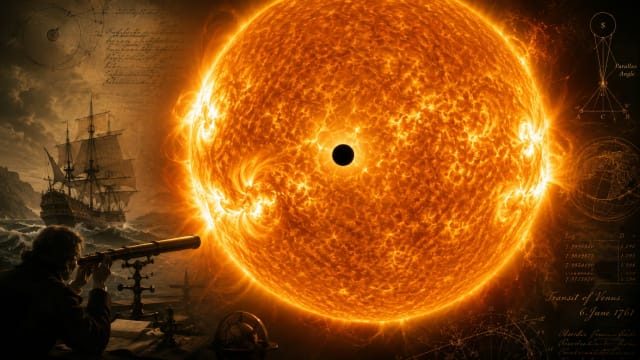
Chasing Shadows
A tiny shadow sent astronomers across oceans, empires into competition and science into a new age. The transit of Venus reveals the power of curiosity.
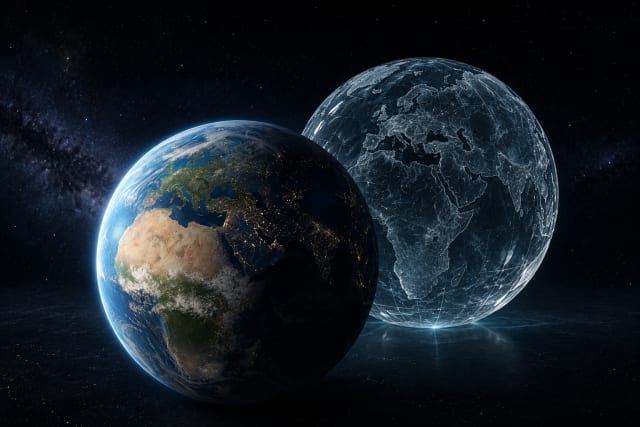
The Backup Planet Paradox
Is Mars colonization humanity's ultimate insurance policy, or a costly distraction from Earth's problems? Explore the backup planet paradox.
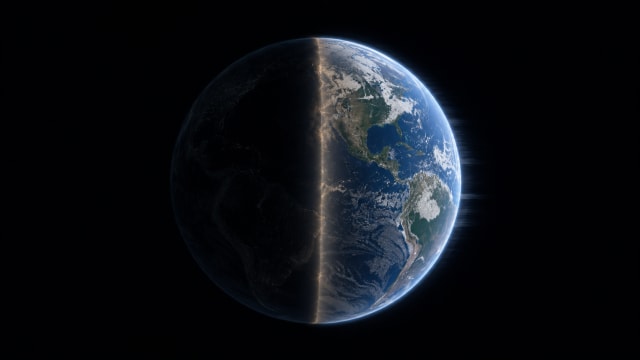
What If the Earth Stops Spinning?
What would happen if the Earth stopped spinning? Explore the science, climate chaos, and hidden forces that make life on our planet possible.