Why Your Body Is Older Than the Earth
The atoms in your body were born in stars that died before Earth existed. Here is the astonishing story hidden inside every human being.
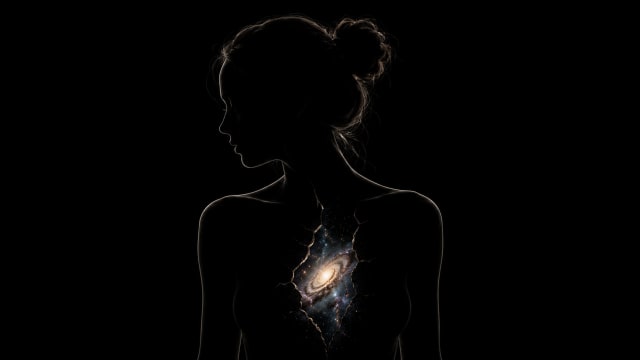
Stand on a beach and pick up a handful of sand. The grains seem ancient. They have endured waves, storms, and centuries of erosion. Mountains have crumbled into them. Oceans have carried them. Compared with a human life, they feel impossibly old.
Yet the atoms in your body are older still.
At first glance, that claim appears absurd. The Earth formed around 4.5 billion years ago. Human beings appeared only recently. Most of us live for less than a century. How could our bodies possibly be older than the planet beneath our feet?
The answer lies in a distinction we rarely make. We confuse the age of an object with the age of the material from which it is made. Consider a house built last year from reclaimed wood. The house is new. The timber is not. The structure has a recent birthday, but its ingredients carry a much longer history. Something similar is true of every human being.
Your body is young. The matter from which it is made is ancient.
The Universe began with remarkably few ingredients. In the aftermath of the Big Bang, most matter consisted of hydrogen and helium. The elements that make life possible were largely absent. There was no carbon for cells, no oxygen for lungs, no calcium for bones, and no iron for blood. Those elements were forged later inside stars.
For millions and sometimes billions of years, stars acted as immense cosmic furnaces. Under extraordinary temperatures and pressures, they fused simple elements into heavier ones. Carbon emerged. Oxygen followed. Iron appeared. When massive stars exhausted their fuel, many ended their lives in spectacular explosions known as supernovae. These explosions scattered newly created elements across space. In a sense, stars spent their lives manufacturing the raw materials of future worlds.
Long before the Earth existed, clouds of stellar debris drifted through the galaxy. Within those clouds floated the atoms that would one day become oceans, forests, mountains, and people. They travelled silently through space for unimaginable stretches of time. Eventually, one such cloud collapsed under gravity. At its center, the Sun ignited. Around it, dust and gas gathered into planets. One of those planets became Earth.
Before there were oceans, mountains, or life, the ingredients of your body were already travelling through the cosmos.
The story might seem complete there, but it is only halfway finished. The carbon released by ancient stars entered rocks, oceans, and living organisms. The oxygen produced in stellar interiors became part of the atmosphere. The calcium forged in long dead suns found its way into skeletons. The iron born in stellar explosions eventually flowed through human veins. Every breath you take is part of a journey that began before the Earth itself.
A skeptic might object that your body was assembled only recently. That is certainly true. The arrangement is young. The matter is not. A sentence written yesterday may contain words thousands of years old. A melody composed today may use notes that have existed for centuries. Likewise, a human body is a recent pattern formed from ancient ingredients.
This distinction changes how we think about ourselves. We often imagine humans as newcomers standing on an old planet. Yet the material from which we are made predates the planet entirely. The atoms in your body witnessed a universe without Earth, without oceans, without life, and without any creature capable of asking where those atoms came from.
The cliché tells us that we are merely dust. It sounds dismissive, almost insulting. The truth is stranger.
We are dust, but not ordinary dust. We are the remnants of stars that lived and died before our world was born. We are ancient matter arranged into a temporary form capable of curiosity. Long before there were continents or dinosaurs or human civilizations, the ingredients that would one day become you, were already travelling through the cosmos.
Your life may be brief. Your atoms are not.
Discussion
Sign in to join the discussion.
More in Space & Astronomy
What Dark Matter Tells Us About Scientific Knowledge: An RC Inspired by IIM Indore
Dark matter has never been directly observed. We are nonetheless highly confident it exists. The gap between these two facts reveals something important about how science actually works.
Chasing Shadows
A tiny shadow sent astronomers across oceans, empires into competition and science into a new age. The transit of Venus reveals the power of curiosity.
The Backup Planet Paradox
Is Mars colonization humanity's ultimate insurance policy, or a costly distraction from Earth's problems? Explore the backup planet paradox.
What If the Earth Stops Spinning?
What would happen if the Earth stopped spinning? Explore the science, climate chaos, and hidden forces that make life on our planet possible.