When Whales Learn to Sing: An RC Inspired by IIM Indore
Whale songs reveal how isolation, imitation and migration can create, preserve and erase cultural differences within animal populations.
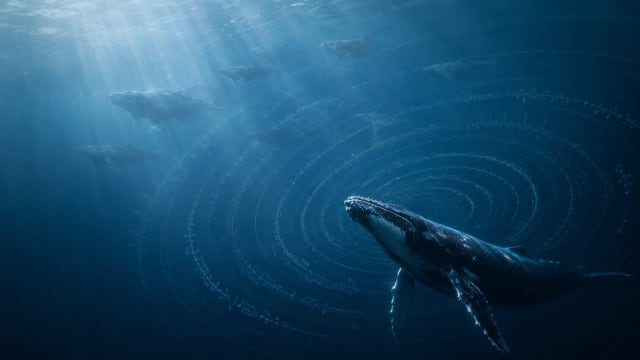
A humpback whale does not need a dictionary to inherit a song. It needs other whales. Across oceans, these enormous animals produce elaborate sequences of moans, cries and pulses that can last for hours. Yet the remarkable part is not simply that whales sing. It is that their songs change, spread and sometimes disappear. A population can sound different from another population not because its members evolved different vocal organs, but because they learned different traditions.
This makes whale song an intriguing problem in the evolution of culture. Culture is usually treated as a human achievement, something requiring language, institutions or conscious teaching. But if culture means behaviour that is acquired socially, modified over time and transmitted between individuals, whales qualify surprisingly well. Their songs suggest that culture may begin with something much simpler than civilisation. It may begin with imitation.
Consider what happens when a population becomes relatively isolated. A whale develops a small variation in its song. Another whale hears it and incorporates the change. Others imitate them. Over time, an accident can become a convention. A particular sequence of sounds, meaningless in itself, becomes characteristic of a population because enough individuals have copied it. Isolation gives the variation time to accumulate.
This is why animal culture can resemble language without being language. A dialect does not require its speakers to understand grammar or possess a concept of linguistic identity. It requires only that individuals learn from one another and that learning remain sufficiently local. Once that happens, geography can become audible. The ocean itself becomes a kind of archive, preserving differences that began as accidents.
But isolation is only half the story. When populations meet, cultural boundaries become permeable. Whales migrate. Individuals encounter unfamiliar songs and may imitate elements of them. A pattern that once belonged to one population can spread through another. The result is not necessarily the simple replacement of one tradition by another. Songs can become blended, altered and recombined, producing new forms that neither population possessed before.
One might object that calling this culture merely stretches the word beyond usefulness. After all, whales are not writing songs down, debating musical theory or deliberately designing traditions. Their changes could simply be biological noise. Yet this objection confuses conscious invention with cultural transmission. Human traditions often begin without anyone knowing that they are creating traditions. What matters is not whether a behaviour was invented deliberately, but whether socially learned variation can persist and spread.
The deeper lesson is that culture may not require a uniquely human mind. It requires a network. Once individuals can observe one another, copy behaviour and introduce small variations, history enters the system. The present begins to carry traces of the past, not through genes, but through memory distributed across a population.
This also changes how we think about evolution. Genes are not the only things that accumulate. Behaviours can accumulate too. A whale born today may inherit its body from its parents, but it can inherit something else from the community around it, a repertoire shaped by countless earlier encounters. Biology supplies the instrument. Social learning writes part of the music.
A tradition does not need a library. Sometimes all it needs is a listener, a copy, and enough time for an accident to become a pattern.
Perhaps that is why whale song feels strangely familiar. We recognise in it something we thought belonged exclusively to us. A tradition does not need a library. Sometimes all it needs is a listener, a copy, and enough time for an accident to become a pattern.
Discussion · 2
Beautifully structured and written
Should I need to write this as an essay on my own?
Sign in to join the discussion.
More in Animals
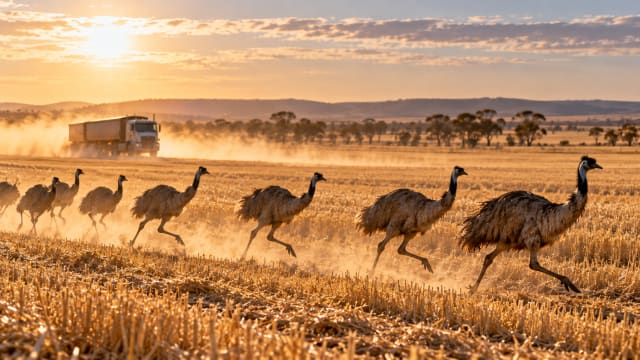
The Emu War and the Problem Soldiers Could Not Shoot
In 1932 machine guns were sent against emus in Western Australia, and the birds won the first round. The story is usually told as comedy, yet it hides a real question about what kind of problem an army can solve.
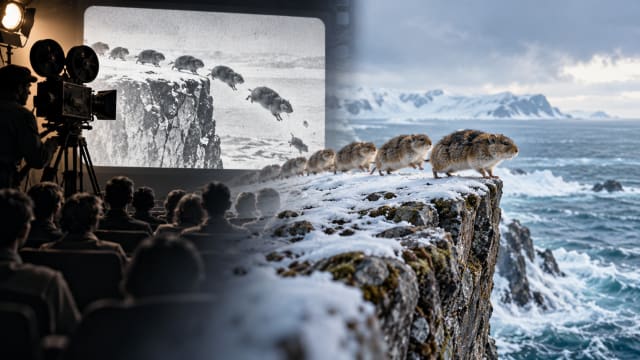
The Cliff That Was Built - An RC Inspired by IIM Indore
A famous film showed lemmings marching to their deaths in 1958. The scene was staged, and the myth it fed says more about the audience than about the animal.
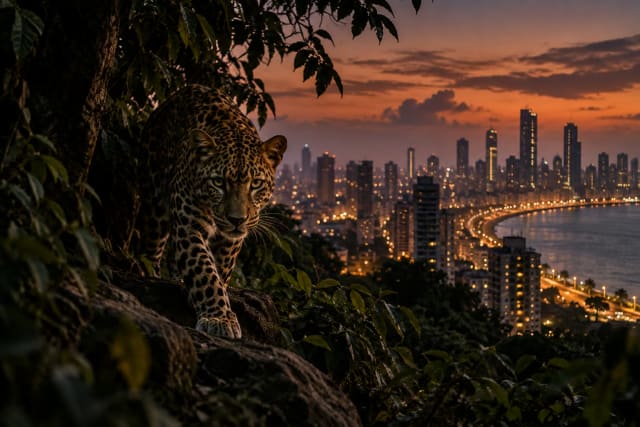
The Leopard That Moved Back to Mumbai: An RC Inspired by IIM Indore
47 leopards live inside Sanjay Gandhi National Park, entirely surrounded by Mumbai. They have killed more than thirty people since 2002. Neither the city nor the leopards are going anywhere.
The Parrot That Bets Everything on One Fig: An RC Inspired by IIM Indore
The Dracula Parrot eats almost nothing but figs from a single genus of tree. Its beauty is the product of extreme specialisation. So is its vulnerability.