12 long-form religion & mythology essays, written at the density of real CAT passages, each with CAT, XAT and GMAT-style questions and explanations. For real exam passages, practise the solved CAT RC PYQs; for a daily routine, see CAT RC practice.
Religion & Mythology3 min
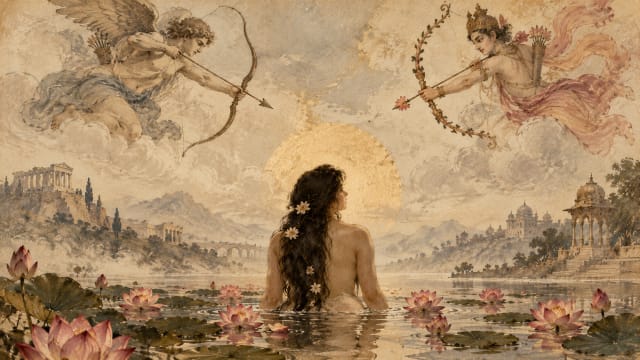
Eros began as a force older than the gods, Kamadeva as the first seed of mind. Somewhere along the way both became boys with bows, and nobody has explained why the wound still feels like it comes from outside.
Religion & Mythology5 min
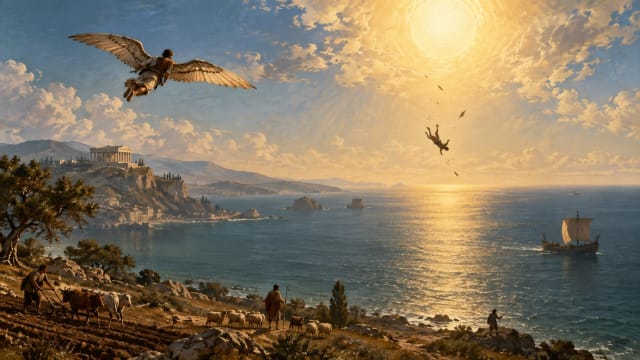
Daedalus built the wings, warned his son, watched him fall, and flew safely to Sicily. He succeeded at everything Icarus failed at. The myth does not remember him.
Religion & Mythology5 min
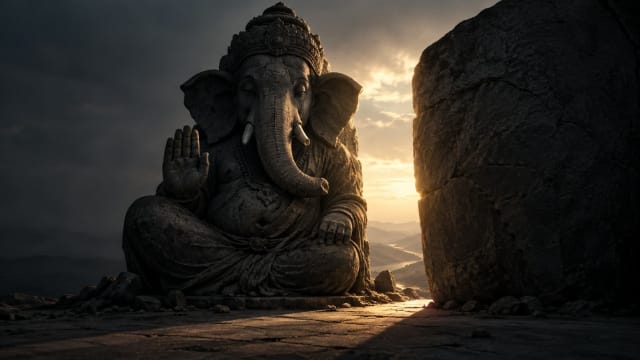
Ganesha removes obstacles. Ganesha places them. The same deity, the same tradition, the same prayer. This is not a contradiction. It may be the most honest theology ever written about the nature of difficulty.
Religion & Mythology5 min
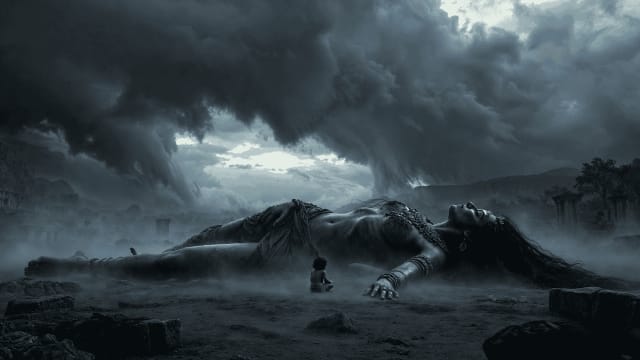
Putana came to kill Krishna with poisoned milk. He killed her instead. Then he gave her the status of a mother. The Mahabharata is not confused about this. It is making its hardest argument.
Religion & Mythology9 min
A memoir of love, religious identity and Islamophobia, exploring how a Muslim name can become a category and a person can disappear behind it.
Religion & Mythology6 min
Why did ancient Greece fear Artemis? The goddess of the hunt symbolized female autonomy beyond marriage, power, and social control.
Religion & Mythology5 min
A sharp reflection on how science gives power and religion gives purpose, and why separating them leaves humanity either directionless or blind.
Religion & Mythology5 min
A reflective exploration of why mermaids endure in human imagination, revealing them not as sea creatures but as symbols of our own divided nature.
Religion & Mythology3 min
A reflection on immortality through Ashwatthama, showing how endless life becomes a burden of memory, consequence, and unfinished identity rather than a gift.
Religion & Mythology3 min
A philosophical reflection on whether Hanuman lives not as a body, but as a timeless force shaping human courage, discipline, and devotion.
Religion & Mythology3 min
A reflection on the Mahabharata as neither strict history nor mere mythology, but a living memory system that preserves enduring human dilemmas through narrative rather than factual record.
Religion & Mythology5 min
An analytical reading of the Narasimha myth as a critique of rigid binaries. The systems built on exhaustive conditions and neat categories are fragile.