How Doubt Became a Method: An RC Inspired by IIM Indore
Skepticism is not the rejection of knowledge, but a discipline for deciding how much confidence our evidence deserves.

There is something unsettling about certainty. A person who says "I know" closes a door that doubt keeps ajar. Yet civilisation depends on people acting as though many uncertain things are true. We trust our memories, our senses, our measurements and the testimony of others, even though each can deceive us. Skepticism begins in this small discomfort: if our means of knowing are fallible, what entitles us to call anything knowledge?
The ancient skeptics turned this discomfort into a method. Rather than replacing one doctrine with another, they questioned the confidence with which doctrines were defended. Their target was not ignorance itself but dogmatism, the habit of treating a conclusion as settled when the evidence did not warrant such confidence. To suspend judgement could therefore be an intellectual discipline. The skeptic need not prove that a claim was false; it was enough to show that the reasons offered for accepting it did not compel belief. Doubt became less a destination than a way of testing how firmly a belief stood.
Doubt became less a destination than a way of testing how firmly a belief stood.
This distinction matters because skepticism is often mistaken for the assertion that nothing can be known. That is the most radical version of the position, and it creates an immediate difficulty. If someone claims to know that knowledge is impossible, the claim appears to defeat itself. More importantly, ordinary life cannot wait for perfect certainty. We cross roads, diagnose illnesses, construct bridges and make political decisions without possessing absolute guarantees. A philosophy that demanded certainty before action would leave us permanently at the starting line.
Yet the problem of certainty becomes harder when we consider the possibility that even our most familiar sources of knowledge may mislead us. Descartes famously used doubt as a kind of intellectual solvent, asking what would remain if perception, memory and inherited assumptions could all be questioned. The exercise was not valuable merely because it produced uncertainty. Its ambition was to discover whether some beliefs could survive systematic doubt. Skepticism thus became a tool for separating what merely feels obvious from what can withstand examination.
Critics of skepticism have therefore been right about one thing. Doubt, if made absolute, can become sterile. A person who refuses every belief because certainty is unavailable has not necessarily become more rational; they may simply have exchanged dogmatism for paralysis. But this objection does not destroy skepticism. It reveals its proper limit. The useful skeptic does not demand certainty from every belief. Instead, the skeptic asks whether the strength of our confidence matches the strength of our reasons.
This produces a subtler picture of knowledge. Between certainty and ignorance lies an enormous territory occupied by probability, evidence, testimony and provisional belief. Much of what we call knowing belongs there. Scientific conclusions remain open to revision; historical explanations compete for evidence; even personal memories acquire their authority gradually, through consistency and corroboration. To acknowledge this is not to weaken knowledge but to make its standards more honest.
Perhaps, then, skepticism's greatest achievement is not teaching us to doubt the world but teaching us to calibrate ourselves within it. The important question is no longer simply, "Is this certain?" but "How certain should I be?" That shift sounds modest, yet it changes the character of thought. Certainty asks us to stop investigating. Calibrated doubt gives investigation somewhere to go.
The skeptic's real enemy, therefore, is not belief. It is the belief that has forgotten it might be wrong. In that sense, doubt is not the opposite of knowledge. It is one of the conditions under which knowledge remains alive.
Discussion
Sign in to join the discussion.
More in Epistemology
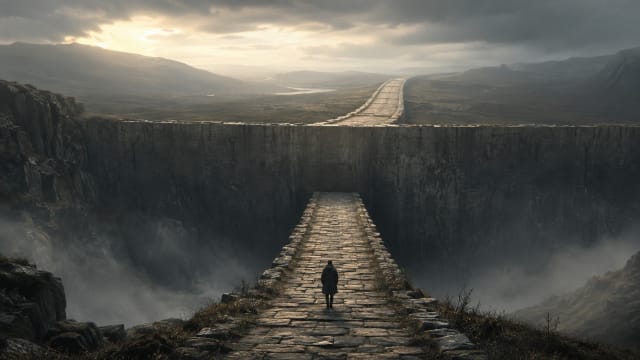
Aporia
The ancient Greeks called it aporia — a lack of passage. It is not the moment when thinking fails. It is the moment when thinking discovers that the question itself was badly formed.
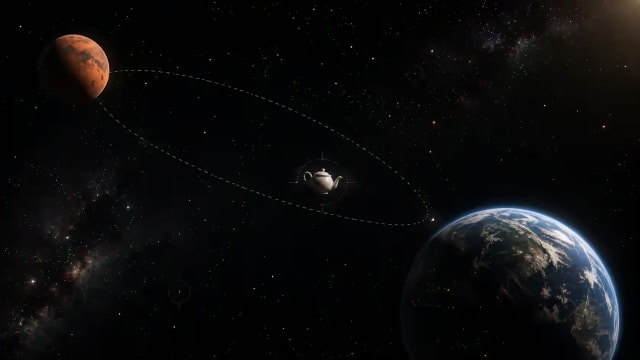
The World's Most Famous Teapot
Discover how Bertrand Russell's famous celestial teapot transformed our understanding of evidence, belief and the burden of proof.
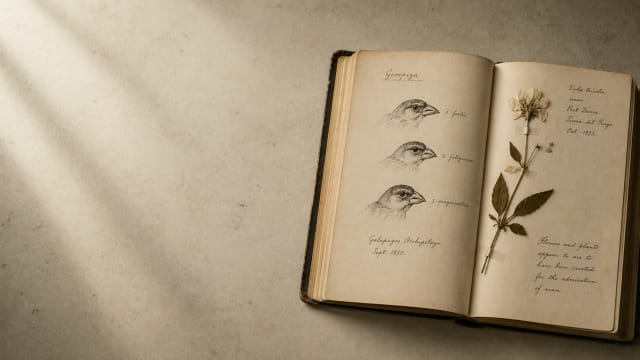
Why Darwin Needed Jane Austen
What Charles Darwin's love for Jane Austen reveals about beauty, evolution, art, and the natural world.

The Measured Face and the Unmeasured Soul
Beauty feels instinctive yet follows patterns of symmetry and proportion shaped by biology and culture. Its deepest impact lies beyond what numbers can capture.