Where Power Begins at the Mother
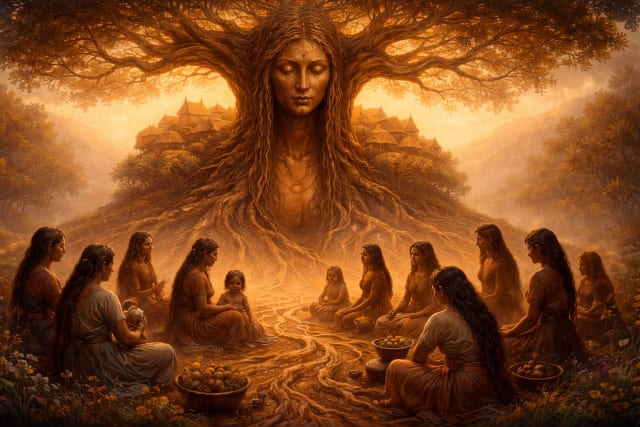
A reflective exploration of matriarchy that challenges the idea of power as dominance, revealing instead a system rooted in continuity, care, and the quiet endurance of human relationships.
Abhishek Leela Pandey
A reflective exploration of matriarchy that challenges the idea of power as dominance, revealing instead a system rooted in continuity, care, and the quiet endurance of human relationships.
A reflective exploration of whether alien life exists, balancing scientific probability with cosmic silence.
A lyrical exploration of how childhood quietly architects adulthood, arguing that our earliest habits of thought and feeling do not fade but govern who we become, even when we believe we have outgrown them.
A meditation on the cosmic silence that surrounds us, this essay explores whether humanity is a rare accident or part of a vast, unseen community. It argues that the question of being alone reveals less about the universe and more about the limits of human perception and responsibility.
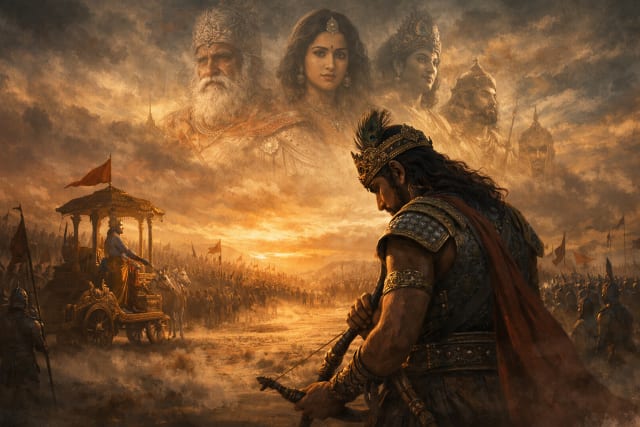
A reflection on the Mahabharata as neither strict history nor mere mythology, but a living memory system that preserves enduring human dilemmas through narrative rather than factual record.
Dhurandhar explores how time erodes identity through the slow psychological collapse of a man who becomes the role he was meant to only perform.
Even decades after political independence, many former colonies still measure knowledge, language, and success through Western validation. The colonial hangover reveals how empire survives not in territory but in institutions, prestige, and the psychology of legitimacy.
Civilisation often tells a flattering story about itself. It claims that reason lifted humans above instinct and that culture replaced the wild impulses of our evolutionary past. Yet beneath the language of ambition, morality, and progress, the ancient animal within us continues to shape our desires, fears, and social behaviour. This essay explores how human civilisation is not an escape from our animal nature but an ongoing negotiation with it, where instinct supplies the energy of life and reflection attempts to guide it.
As AI reshapes the global workforce, a new inequality is emerging. The real divide is not who uses artificial intelligence but who designs it, and without women in the architect's seat, tomorrow's algorithms may quietly inherit yesterday's biases.
An exploration of the “Good Girl Tax,” showing how the ancient Madonna–Whore archetype still shapes workplace expectations and quietly restricts women's professional advancement.
Two women stand at the beginning of myth. Lilith refuses submission and leaves Eden, while Eve obeys and remains within the order of the garden.
Cleopatra as an economic strategist, by controlling grain flows, taxation, and trade through the Nile, she turned Egypt into the financial backbone of Rome
The “broken rung” at the first promotion quietly disrupts the leadership pipeline, preventing many talented women from ever reaching the top.
A psychological reinterpretation of Batman that explores whether Gotham's legendary hero is actually a disciplined psychopath shaped by trauma.
A concise exploration of whether destructive patterns can emerge from traditionally feminine traits.
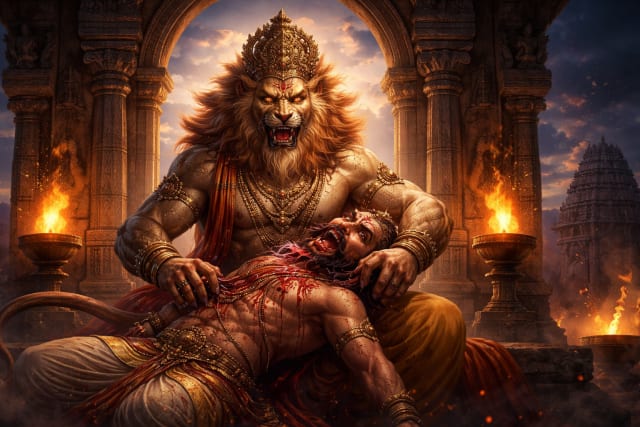
An analytical reading of the Narasimha myth as a critique of rigid binaries. The systems built on exhaustive conditions and neat categories are fragile.
A Holi celebration becomes a living diagram of diffusion and turbulence, revealing how what appears chaotic, moves according to invisible structural laws.
An exploration of infinite loops from Zeno's paradox to modern science fiction, arguing that repetition is not a trap but a structure.
In an age that worships analysis, some minds mistake simulation for action. The Logoslave is not defeated by ignorance but immobilized by excess reason.
Porn addiction is less a crisis of libido than a crisis of limitless novelty. In an age of algorithmic abundance, desire is no longer courted.
A sharp, philosophical distinction between biological sex and social gender, clarifying how body and identity intersect—and why the difference matters.
Why are we drawn to numbers? This essay explores numerophilia—the psychological comfort and philosophical depth behind our love for mathematical order.
When the scripts we inherit fail, we confront the unsettling fact that meaning is not discovered but made. In that fracture lies a quiet, difficult freedom.
If humanity is defined not by tools but by narrative empathy and pluralism, dolphins may represent a parallel, aquatic civilization.
An argument that corporate heritage, like a building's “dead load,” can quietly exhaust an organisation's capacity to adapt.
Observational astronomy shows that by refining how we look, we refine what we can claim to know about the universe.
Ghosts may not haunt houses, but minds. This essay explores how perception, grief, and memory turn absence into presence.
An existential essay on meaning, modern life, identity, freedom, and the quiet psychological crisis hidden beneath achievement and productivity.