The Village Republic and the Sink of Localism
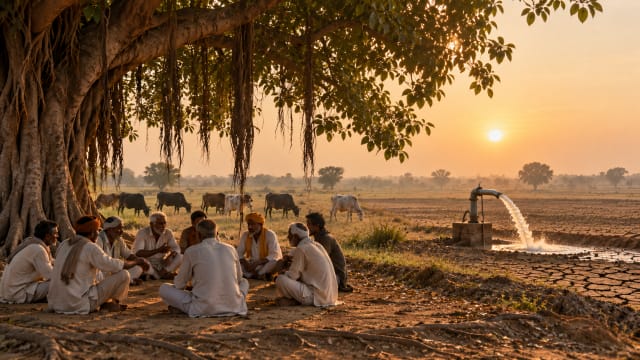
Gandhi saw the village as a republic and Ambedkar saw it as a trap, and India's long experiment with panchayats has still not decided between them.
GRADFLIX Editors · Hard
Gandhi saw the village as a republic and Ambedkar saw it as a trap, and India's long experiment with panchayats has still not decided between them.
A hunted man wrote the most confident book about human improvement in March 1794. Malthus, two world wars and the Indian Constitution have each answered it since, and none has closed the argument.
A famous prediction of mass famine failed, yet the fear behind it shaped policy in India and still shapes arguments about numbers, fairness and the future.
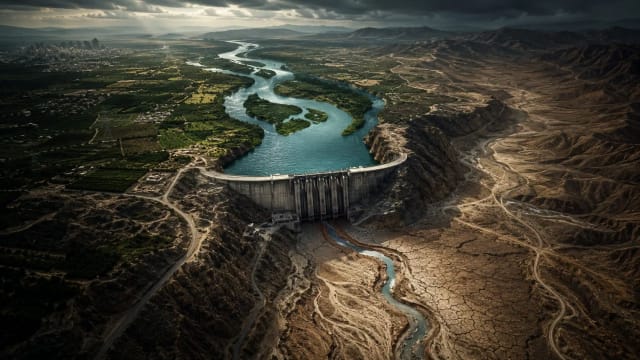
India built its great dams in the name of the many, and the reservoirs rose over the homes of a few. The question of who may be asked to pay for a public good has never been fully settled.
India's Constitution names an official language, a list of scheduled languages and a promise to review. Seven decades later the review has still not ended the argument.
India stopped counting caste in 1951 and is preparing to count it again. Whether a census describes a society or helps to build it is a question older than the Republic.
The man who made the word famous meant it as a satire. A look at his warning, at India's long argument over merit and reservation, and at what deserving can mean.
A famous parable says shared resources are doomed, yet villages in India and elsewhere have long proved otherwise, and the hardest cases are the ones nobody can see.
India ended its dependence on imported wheat within a decade, and the methods that delivered plenty are now draining the soil that grew it. Can a nation judge a success whose bill arrives half a century late?
Ashoka's edicts confess to the horror of Kalinga, and in the same breath warn the forest peoples of his power. The tension between a state's conscience and its coercion has never been resolved, in his empire or in the Republic that adopted his symbols.
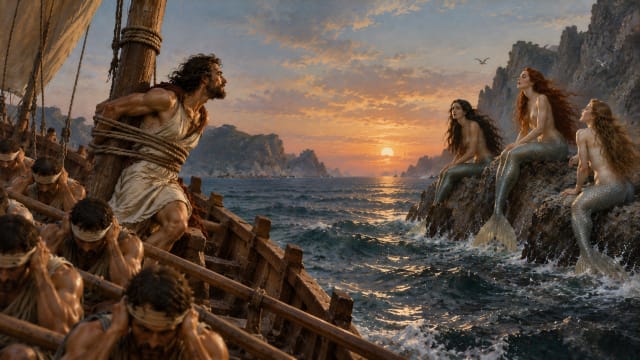
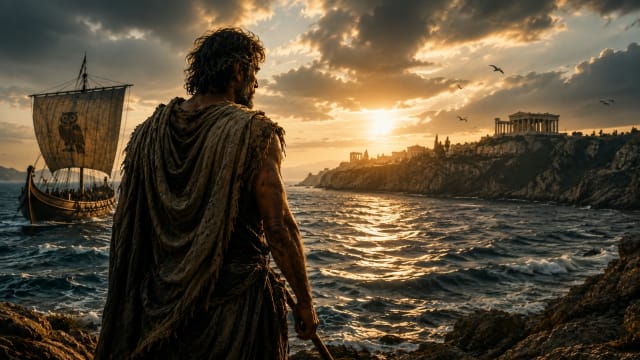
In the Odyssey the hero orders his crew to tie him to a mast so that he can hear a song that has killed every sailor before him. The knots look like the end of freedom, and the story has been used for three thousand years to argue that they are its proof.
Most animals mate seasonally. Humans do not. The question is not why humans have more sex. It is what human sexuality has become, and why it looks less like animal mating and more like language.
Embarrassment is not shame. It is not guilt. It is the moment the self discovers, with retroactive mortification, that it has been visible all along, and that visibility was never chosen.
Neuroscience reveals how prediction shapes consciousness, surprise, self awareness and our strange dependence on other minds.
Dark matter has never been directly observed. We are nonetheless highly confident it exists. The gap between these two facts reveals something important about how science actually works.
The ancient Greeks called it aporia — a lack of passage. It is not the moment when thinking fails. It is the moment when thinking discovers that the question itself was badly formed.
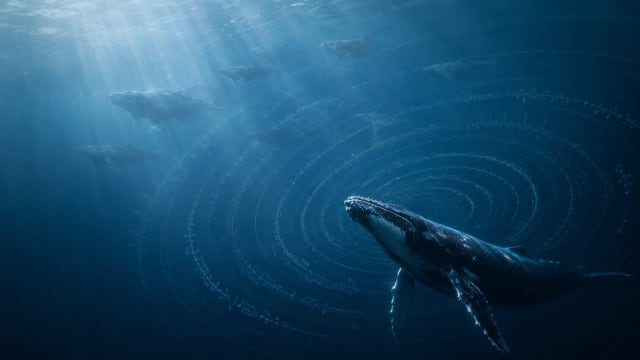
Whale songs reveal how isolation, imitation and migration can create, preserve and erase cultural differences within animal populations.
Skepticism is not the rejection of knowledge, but a discipline for deciding how much confidence our evidence deserves.
Odysseus embodies the hero’s journey not through victory alone, but through the losses, disguises and transformations that make returning home possible.
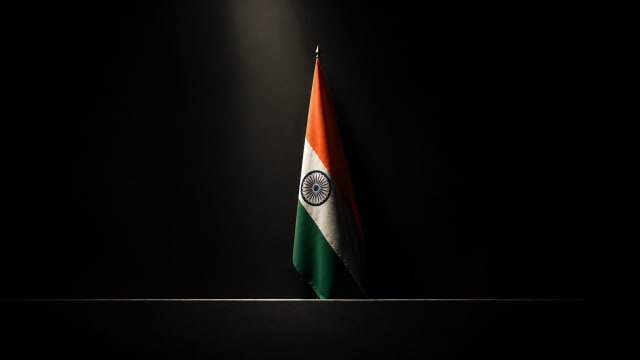
India's Independence ended colonial rule in 1947, but did it make Indians truly free? An essay on sovereignty, inequality and the unfinished meaning of freedom.
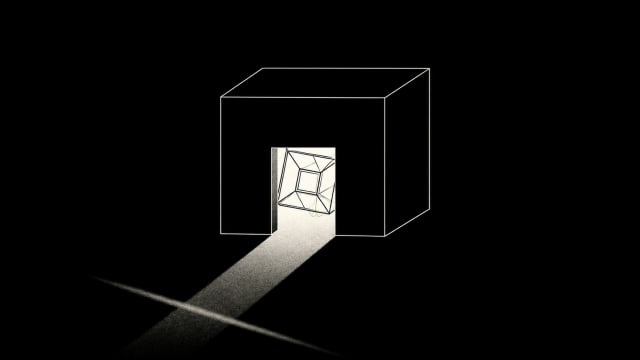
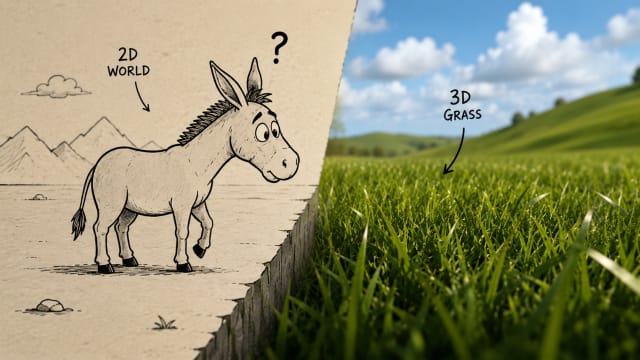
A thought experiment in higher dimensions asks whether what looks like a miracle might simply be reality viewed from a geometry we cannot perceive.
Water is rarely a weapon by itself. But when control over its flow creates unequal dependence, rivers can become instruments of geopolitical power.
A memoir of love, religious identity and Islamophobia, exploring how a Muslim name can become a category and a person can disappear behind it.
Does reading uncover meaning or create it? Explore language, consciousness, Gödel's theorem and predictive processing in this philosophical essay.
Neymar's career reveals why talent alone never guarantees greatness, and why unrealized potential often leaves a more enduring legacy than victory.
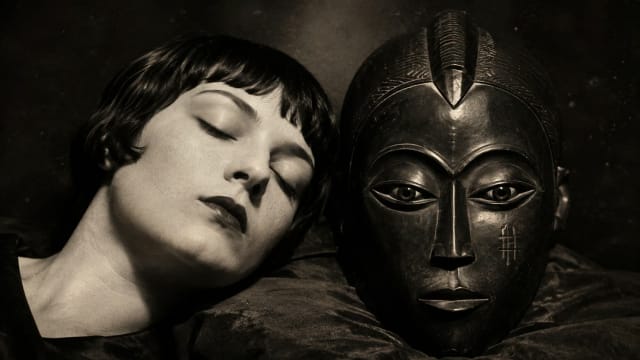
Why does a carved mask seem alive? Man Ray's iconic photograph reveals why humans instinctively project consciousness onto faces, real or imagined.
Is monogamy a biological destiny or a cultural invention? A philosophical exploration of polyamory, love, evolution, and the arithmetic of romance.
Ancient humans can vanish without leaving a single bone. Yet fragments of their DNA continue telling a story that archaeology never could.
Why great companies outlive great CEOs. Explore corporate governance, institutional resilience, succession planning, and the myth of indispensable leaders.
Long before natural selection shaped life, the geometry of space had already determined which organisms could exist and which never could.
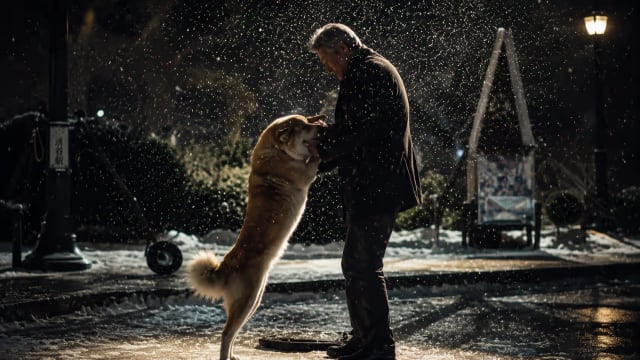
Why does Hachikō's story still move millions? A philosophical reflection on loyalty, memory, grief, and the kind of love that outlives death itself.
An exclusive extract from Abhishek Leela Pandey's The Art of Corporate Power, exploring how capitalism transformed warfare into strategic competition.
Walter Mitty reveals that imagination is not an escape from reality but a rehearsal for courage, preparing us to become who we dare to imagine.
Beyond Gothic horror, Dracula exposes Victorian anxieties about female desire, agency, sexuality and the uneasy relationship between instinct and culture.
Manifestation promises cosmic rewards, but psychology suggests belief changes us more than the universe. Where does science draw the line?
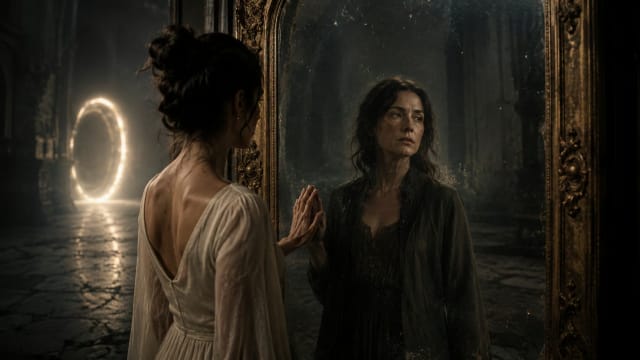
Copies force us to ask what truly survives through time. The answer may reveal why cultures disagree about authenticity itself.
How does language shape our understanding of nature? Discover why animal behaviour, evolutionary biology and human perception are deeply intertwined.
What if the biggest obstacle to time travel isn't physics but identity? Before bending spacetime, we may need to answer who actually travels.
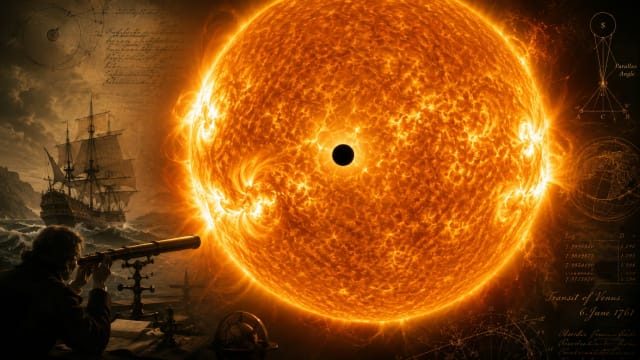
A tiny shadow sent astronomers across oceans, empires into competition and science into a new age. The transit of Venus reveals the power of curiosity.
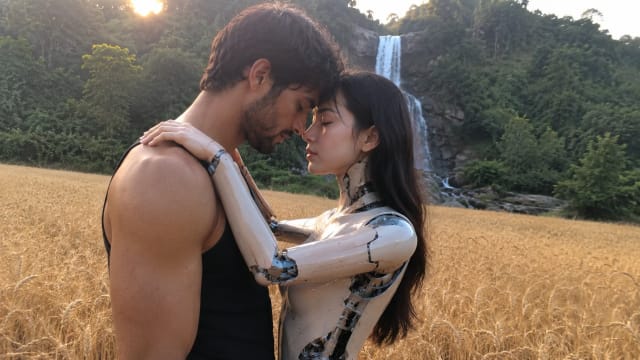
Artificial companions do more than imitate intimacy. They expose the hidden assumptions that have always shaped how humans recognise love.
A film that condemned consumer culture became one of its most successful products, revealing how capitalism can package even rebellion.
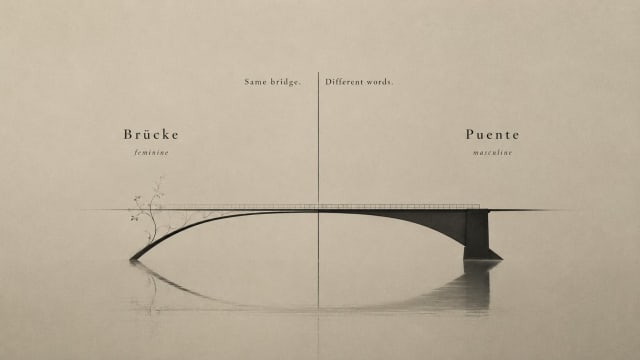
German poets call bridges fragile, Spanish poets call them strong. The same object, the same world, only the grammar changes.
A central bank governor says a few sentences about the future, and prices shift before any policy actually changes. Why does mere belief move an economy?
Most people are certain they understand how a zipper works, until asked to explain it. The same gap shows up in political conviction.
AI systems increasingly learn from text that earlier AI systems wrote. History has seen this error before, in monasteries.
Two men drive home equally drunk. Only one kills a child. Philosophy calls the gap between them moral luck.
Is the nation state losing its monopoly on power? Discover why the twenty first century increasingly resembles the political architecture of the Middle Ages.
Inspired by "Lost and Found" from the ALP Horror Universe by Abhishek Leela Pandey, this essay explores identity, memory, childhood and the hidden ways families shape who we become.