The Psychologist Who Asked What Mystics Were For
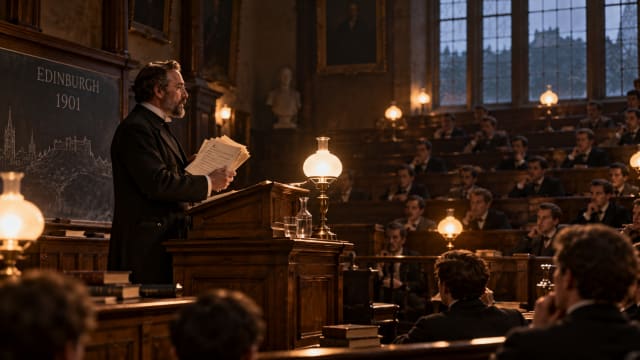
William James judged mystical states by what they did for a life and not by where they came from. The method is generous, and it leaves the oldest question unanswered.
GRADFLIX Editors3 Qs · Hard
William James judged mystical states by what they did for a life and not by where they came from. The method is generous, and it leaves the oldest question unanswered.
Two girls were born in 2018 after a scientist edited their embryos, and the world learned of it afterwards. Courts and regulators have been catching up ever since.
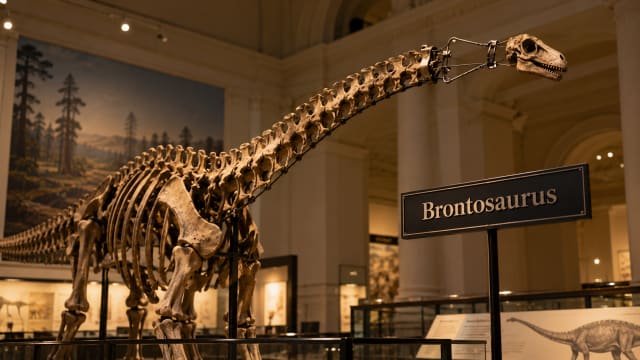
A famous dinosaur lost its name in 1903 and regained it in 2015. Whether it deserved to depends less on bones than on where scientists draw lines.
A bestselling memoir of addiction turned out to contain invented episodes, and its publisher offered refunds with conditions. The case raises a plain question about who guarantees a product's label.
Beauty can be catalogued but desire keeps slipping out of the list, which suggests that attraction lives in a relationship and not in a body.
At the St. Louis Olympics of 1904 one marathoner was thrown out for riding in a car and another was crowned after being given strychnine. The difference had less to do with fairness than with what the rule book happened to say.
Cells taken without consent in 1951 still divide in laboratories around the world. The law has been slower than the cells to say what their source is owed.
A shilling train ride to a temperance meeting in 1841 turned into the template for the package holiday. The business idea inside it was older than the holiday.
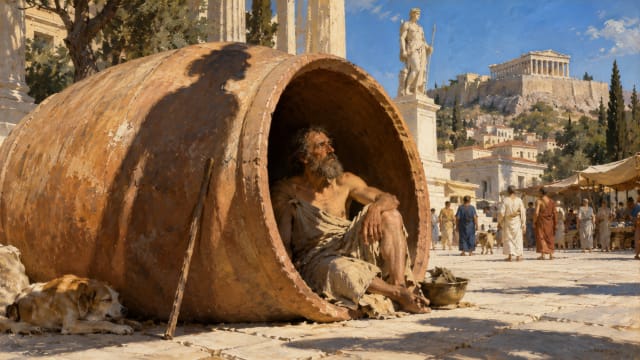
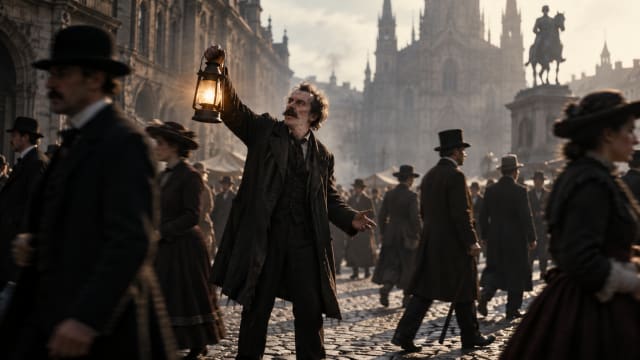
A philosopher said to have lived in a jar once called himself a citizen of the world. More than twenty three centuries later the phrase still cannot be pinned to a single meaning.
Four short rules and a grid of cells produced patterns that move, multiply and compute. Whether that is order or only the appearance of it is harder to say.
In 1974 an economist reported that nations grew richer without growing happier. Fifty years of argument have shown that the answer depends less on the money than on the question asked of the people who have it.
The first baby conceived outside a human body arrived in 1978 to eminent warnings of harm. Fifty years on, the objections look less like caution than like a prediction that failed.
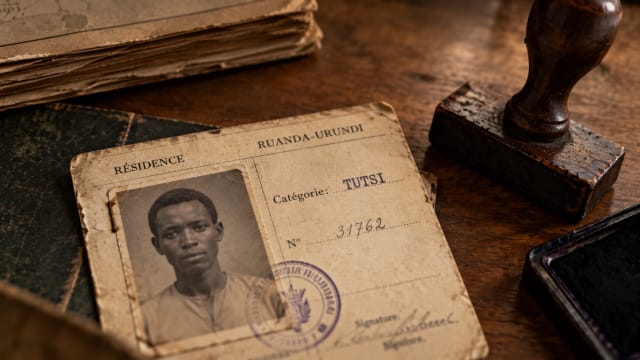
A colonial census in the 1930s took labels that had once been flexible and wrote them onto a card that outlived the empire that issued it.
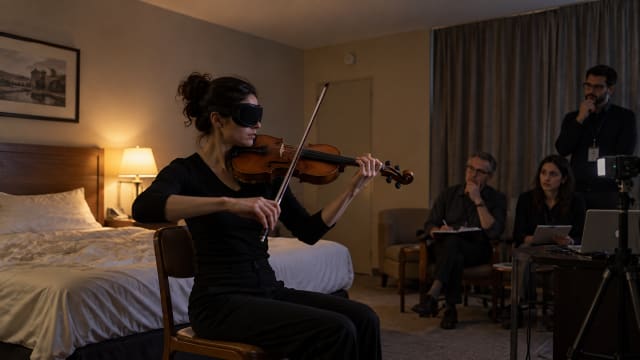
A century of reverence for the Cremonese master met a trial in which the players could not see which violin they held.
On a Pacific island, stones too heavy to carry changed owners without moving, and the habit has become a favourite parable about what money really is.
The story that Marco Polo brought pasta home from China is told in kitchens everywhere, yet a notary in Genoa wrote down a basket of macaroni before he returned.
The most famous sentence in modern philosophy is usually heard as a victory cry, yet the parable that contains it is addressed to people who were not grieving at all.
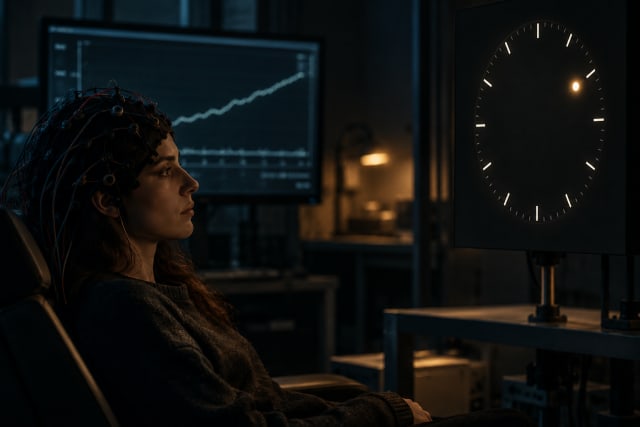
A famous experiment appeared to show that the brain commits to an action before a person knows they have chosen it, but a later reading suggests the evidence may be an artefact of how it was averaged.
Lord Mansfield's famous ruling of 1772 is remembered as the end of slavery in England. The real holding was far smaller, and its reach far greater.
For seventy two seconds in 1977 a telescope heard something that has never come back. An astronomer's one word reaction gave it a name.
A professor found a division error in a Pentium chip in 1994, and a company answered with probabilities. The bill that followed was measured in hundreds of millions of dollars.
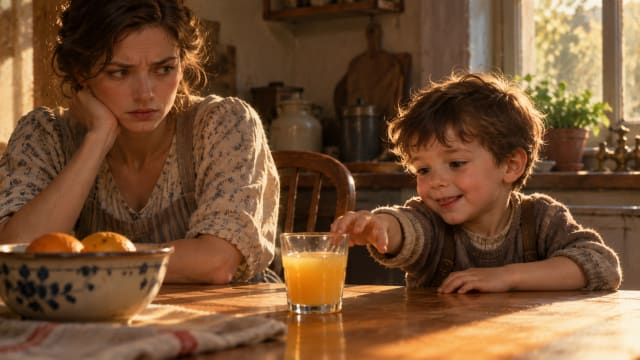
A treat on a plate became the most famous test of character in modern psychology. A larger study and a cleverer experiment suggest that the children may have been answering a different question.
A physicist submitted a deliberate nonsense article to a journal in 1996, and it was published. Thirty years on, both sides of the quarrel still claim the episode as their evidence.
A film reportedly costing Rs 4,000 crore is about to retell the Ramayana, while a modest 1987 serial once emptied India's streets. The question is whether a story can grow larger on screen while its meaning grows smaller.
The Psychology of Being Confidently Wrong
An English reservoir gave the common law a rule about dangerous things. A gas leak in Delhi showed why India needed a stricter one.
Intelligence test scores climbed for most of a century. Then, in at least one country, they began to fall within the same families.
IBM created the personal computer industry in a year. A decision made to save time left the profits of that industry with two of its suppliers.
For generations schoolchildren learned that the Great Wall of China can be seen from space. The first Chinese astronaut returned with a different report.
The trolley problem began as a footnote in an argument about abortion. Its journey into the engineering of driverless cars may have changed what it was built to ask.
A famous paper told basketball fans that streaks were an illusion. A later paper found a flaw in the arithmetic that produced the verdict.
A Tennessee teacher was convicted in 1925 for teaching evolution, and the conviction was undone two years later for a reason that had nothing to do with science. The law that put him in court lived on.
Parents who thought their sons had eaten sugar saw wilder behaviour, though no sugar was served. The finding raises a question about how much of what adults observe is brought in from their own expectations.
Switzerland built the first quartz watch prototypes and then watched Japan sell them. The standard story blames pride, but the real cause may lie in how the industry was organised.
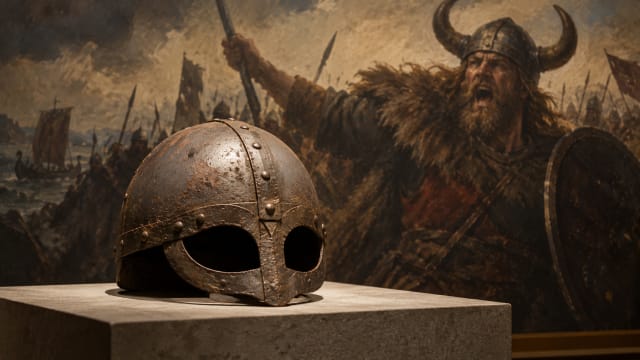
The most famous piece of Viking costume has never turned up in a Viking grave. Its real home is the nineteenth century stage, and its survival is stranger than its origin.
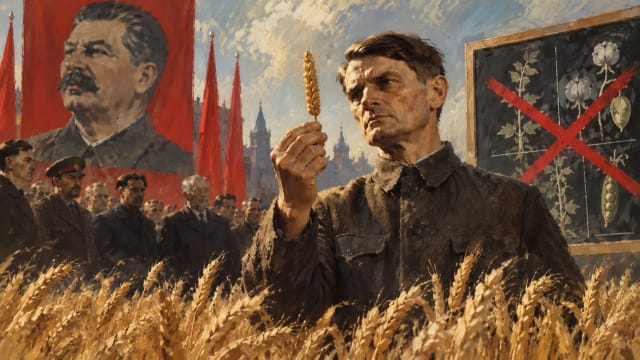
In 1948 a Soviet agronomist persuaded the state to outlaw an entire branch of biology. The reasons it worked, and the reasons it is hard to dismiss cleanly, say something uncomfortable about how belief survives.
A Victorian scientist set out to prove that ordinary people judge badly and found a crowd that was almost exactly right. The trouble is what happens once the crowd starts to talk.
A horse in Berlin tapped out sums to the delight of the crowds, and a psychologist later showed that the arithmetic belonged to the audience.
For two centuries the autopsy figure has been cited as proof that Napoleon was small. A look at the units, the cartoons and the nicknames tells a different story.
In the summer of 1518 a street in Strasbourg filled with people who could not stop dancing, and the official remedy may have made things worse.
Blockbuster is said to have turned down a chance to run Netflix, and the reasons were less foolish than the legend suggests.
On Earth Day in 1990, New York shut a major street and waited for chaos. The chaos never came, and a 1968 mathematical result may explain why, or may not.
Franz Kafka asked his closest friend to burn everything he had left unpublished. The friend refused, and the world gained a canon whose existence rests on disobedience.
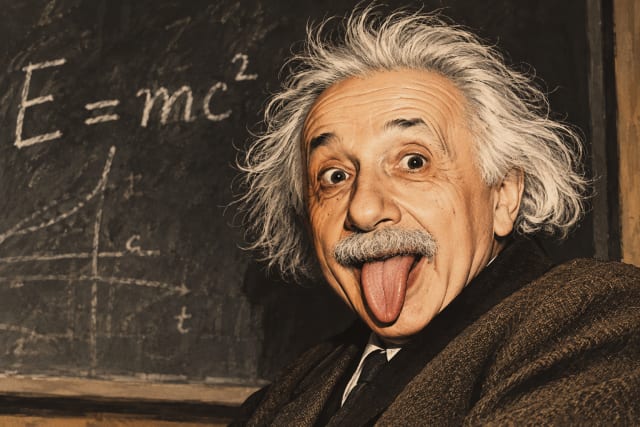
The famous story that Einstein failed mathematics is false, yet it survives because it offers students a comfort that the true story somehow does not.
Continuing a failing project looks irrational until the cost of stopping is counted.
Betamax is often said to have lost despite being the better product, but the market was measuring something else.
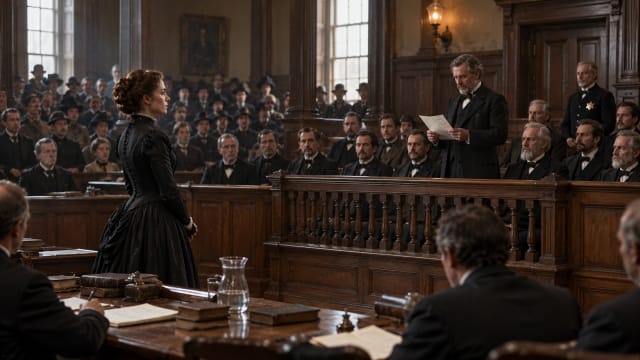
Lizzie Borden walked free in 1893, and the verdict shows what a court can and cannot declare.
In a poem by Abhishek Leela Pandey, the sea and a woman drag the speaker in again and again, and every metaphor runs out before the pull does.